Sauna after the training session: recovery, cardio or strength loss?
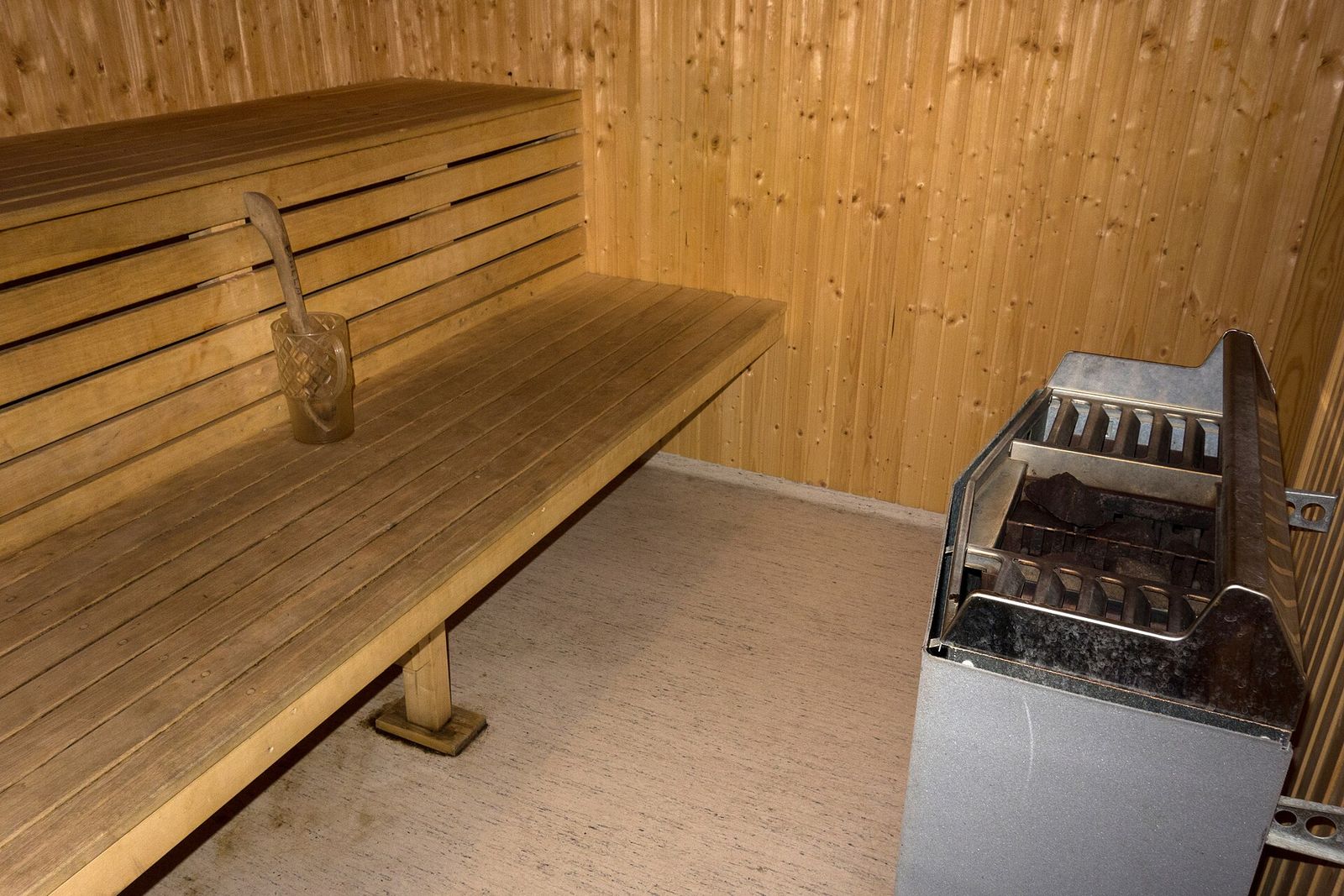
W.carter · CC0
What is the point of finishing a training session with a sauna session? For endurance, a few weeks of sauna use after training increase your blood volume and your capacity for effort. For bodybuilding recovery, it is less clear: traditional sauna use makes you lose a little strength until the next day. Here is what twenty-two studies measure.
For endurance: more blood, more breath
This is the best-documented effect. In six competitive runners, about thirty minutes of sauna use after each training session for 3 weeks extended the time to exhaustion running by 32%, the equivalent of about 1.9% in a time trial. Their plasma volume (the liquid part of the blood) had increased by 7.1%, and their total blood volume by 6.2%.
In trained middle-distance runners, 3 weeks of sauna use after effort improved VO2max (+0.27 L/min) and lactate threshold speed (+0.6 km/h), with a heart rate lower by 11 beats per minute during a heat test. A study of the same type finds similar gains in men and women: about 5% more VO2max. In semi-professional football players, 9 dry sauna sessions at 100 °C in 3 weeks also increased VO2max and work capacity.
Did you know?
Not all trials find a gain. In a crossover trial on 13 men, 4 weeks of sauna use after effort, without drinking, brought nothing more than endurance training alone: hemoglobin mass and VO2max went up just as much with or without sauna. In 14 elite cross-country skiers, ten sessions lowered resting heart rate, but barely changed body temperatures during effort. To progress in endurance, the essential remains training: the article improve your cardio reviews the subject.
For bodybuilding recovery: it depends on the sauna
Here, studies contradict each other, and the type of sauna seems to matter. The infrared sauna, which is milder (35 to 50 °C), gives rather favorable results. In 16 basketball players, an infrared sauna session after bodybuilding limited the drop in their vertical jump and made muscle soreness less severe than passive rest. But in 10 active men, the same type of sauna changed nothing regarding recovery after a volume-oriented bodybuilding session; it only helped after a maximal endurance session.
The traditional Finnish sauna, on the other hand, is an extra load. In active men, a bodybuilding session followed by a sauna lowered maximum strength on the leg press by 9 to 15% and rate of force development by 20 to 26% right after; it was the most tiring protocol, and strength remained lower 24 hours later. The sauna changed nothing regarding hormones measured after effort (testosterone, cortisol, growth hormone).
2020 trial, active men, Finnish sauna
Not the day before an important session
Two other trials complete the picture. Two hours after a sauna, young men's muscles contracted faster but held a steady effort less well, without tiring more. And in 28 people, a sauna taken before an exercise that damages the muscle limited the loss of wrist strength and flexibility that usually follows this effort. For other ways to relieve muscle soreness, see the article muscle soreness: what to do, and for cold, the one on the cold bath after the session.
For the heart: a little extra, with sports
In an 8-week randomized trial in sedentary adults with cardiovascular risk factors, adding 15 minutes of sauna use after exercise improved physical fitness by 2.7 mL/kg/min and lowered systolic blood pressure by 8.0 mmHg more than exercise alone, with lower total cholesterol. In 27 men with slightly high blood pressure, an endurance session followed by a sauna lowered systolic pressure by 8.9 mmHg right after and by 4.6 mmHg still the next day.
A 2020 meta-analysis puts the drop right after the sauna at 5.55 mmHg for systolic pressure and 6.50 mmHg for diastolic pressure, and at 5.26 and 4.14 mmHg after 2 to 4 weeks. In middle-aged regulars, a 30-minute sauna alone did about as well, at the time, as 15 minutes of exercise followed by 15 minutes of sauna.
But the sauna does not replace training. In 10 healthy women, 45 minutes of infrared sauna raised body temperature more than moderate cycling, without any effect on blood pressure, arterial stiffness, or heart rate variability compared to rest: the authors conclude that this sauna does not "mimic" exercise.
Losing weight in the sauna before a weigh-in
The limits, all the same
In summary
| Your question | What the studies say |
|---|---|
| Does the sauna help endurance? | Yes, over 3 weeks: higher blood volume, increased VO2max (but one trial sees nothing) |
| Does it help recover from weight training? | Contradictory: infrared sometimes, Finnish sauna causes strength loss until the next day |
| And the day before a hard training session? | To be avoided: lower performance the next day |
| Does it lower blood pressure? | A little, especially after exercise (about 5 to 9 mmHg) |
| Does it replace training? | No |
| Does it make muscle bigger? | Not studied |
| To lose weight before a weigh-in? | Bad idea: lower performance |
In practice: if you do endurance, a few weeks of sauna after your training sessions can help you. If you do weight training, or if a hard training session awaits you the next day, keep it for days when nothing important follows. To organize your week, the training session generator builds a program for you.
Plan your training week, then place the sauna after endurance training sessions.
Generate my training sessionEvery figure in this article comes from a study you can open: underlined mentions lead to the summary of the work it is taken from, written from the abstract alone. The trials are small and short. The sauna places demands on the heart: in case of heart disease or poorly controlled blood pressure, talk to your doctor. Informative content, which does not replace the advice of a healthcare professional.