Dehydration: how much strength and endurance you really lose
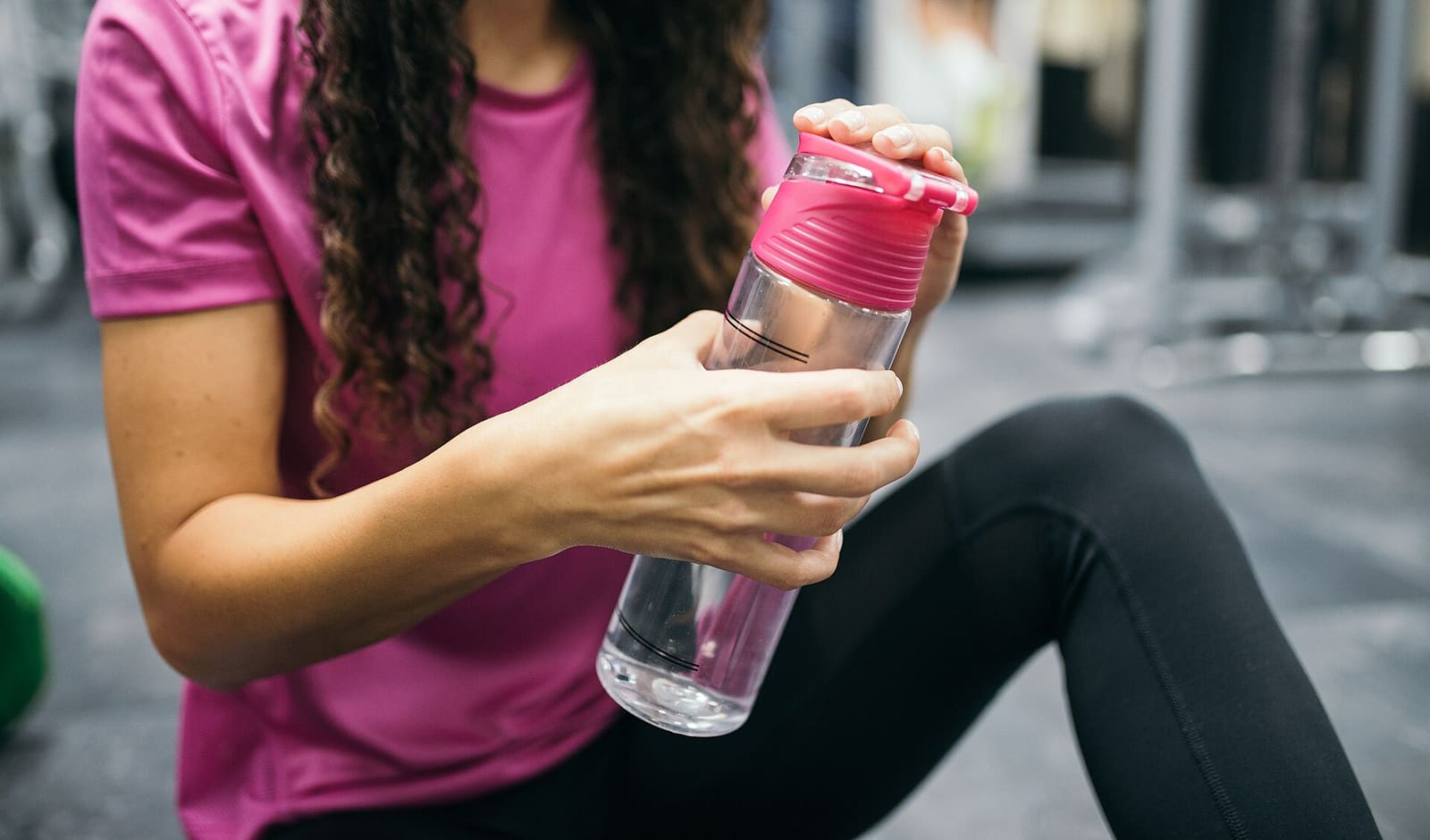
Shixart1985 · CC BY 2.0 (recadrée)
Finishing a training session slightly dehydrated, does it really cost you performance? A little, yes: a few percent in muscle strength and endurance, especially beyond 2% of lost weight and when it is hot. But in endurance, drinking to thirst is enough in most trials, and drinking too much also has its risks. Here is what twenty studies measure.
What sweat costs your muscles
The most comprehensive synthesis on the matter is a 2015 meta-analysis. When water is lost, muscle endurance drops by 8.3%, strength by 5.5% and anaerobic power by 5.8%. On the other hand, anaerobic capacity and jump height do not change significantly. And trained individuals lose slightly less than beginners.
Drop in performance in %, 2015 meta-analysis
In the gym, trials point in the same direction, with nuances. After losing about 3% of body weight, ten men performed fewer repetitions on a full training session: 144 versus 169 on average, with a higher perceived exertion and a heart rate that recovers more slowly. On a squat across multiple sets, the drop appears as early as the second or third set with 2.5% of lost weight, whereas maximal strength and jumping, for their part, do not change.
In ten trained women, still at around 3% dehydration, the one-rep max on the bench press went from 44.1 to 42.7 kg; neither the leg press, nor the number of repetitions, nor the jump moved. And a 1998 trial finds nothing at all on isometric thigh and arm strength, even at nearly 4% of weight lost in the sauna. A 2014 review sums it up well: for strength and power, the effect is marginal.
Did you know?
In endurance: drinking to thirst is often enough
This is where the studies are surprising. A 2011 meta-analysis on cycling time trials finds no drop in performance with an average 2.2% of lost weight. Drinking to thirst performs better there than drinking less (+5.2%) and even than drinking more (+2.4%).
A second meta-analysis explains why studies seemed to contradict each other: in a time trial, where you regulate your own pace, losing up to 4% of weight changes nothing. It is in fixed-intensity tests, until exhaustion, that performance drops (by 1.91%), starting from 2% of lost weight. Its authors therefore advise drinking to thirst in real conditions.
To extend the reading on endurance, the article improve your cardio details what really drives up VO2max.
Heat changes everything
Dehydration weighs heavily especially when it is hot. According to a 2015 review, losing more than 2% of body weight does not impair endurance in the cold, impairs it sometimes in temperate weather, and generally in the heat. Performance begins to drop when the skin exceeds 27 °C, then by 1.5% more per degree.
A trial on eight people shows it directly: with about 3% of weight lost, the work output in 30 minutes dropped by 8% at 20 °C, but not significantly at 2 °C. And at 32 °C, six trained cyclists who had not drunk, with 1.3 kg lost on average, lasted only 6.8 minutes at high intensity, compared to 9.8 minutes when they had drunk.
Team sports and concentration
In a trial on basketball players, each tier of dehydration, from 1 to 4% of weight, degraded the game a bit more: movement drills took 7 seconds longer at 1%, 57 seconds longer at 4%, and successful shots dropped. The threshold where the drop becomes clear: 2%. A review on team sports places the effects rather around 3 to 4% and in the heat, and notes that it is in football that players lose the most water.
On the mental side, a 2018 meta-analysis finds a weak but real effect: attention suffers the most, then coordination and executive functions, and the effect is more marked beyond 2% of lost weight.
Creatine does not dehydrate you
It is often said that creatine "draws water" and increases the risk of heat stroke. A meta-analysis of ten studies finds no evidence that it impairs heat dissipation or fluid balance. In a trial in trained men, already dehydrated by 2% and cycling in the heat, one week of creatine led to a weight gain of 0.88 kg, with no change in body temperature (39.3 versus 39.4 °C under placebo) or thirst. The article creatine: water or muscle? explains where these kilos come from.
For caffeine, a 2003 review specifies the only caveat: a high dose all at once (at least 250 to 300 mg) can make someone who never takes it urinate more, but tolerance sets in among regular consumers, and the amounts in a coffee, tea, or soda have no diuretic effect.
Drinking too much is also a risk
The limits, all the same
In short
| Your question | What the studies say |
|---|---|
| Are you losing strength? | A little: about 5% on average, often nothing on a single maximal effort |
| And over a whole training session? | Fewer reps as the sets go on, once 2.5 to 3% of your body weight is lost in sweat |
| In endurance? | In a time trial, drinking to thirst is enough, even with 2 to 4% lost |
| In the heat? | That is where dehydration weighs the most; in the cold, almost nothing |
| Does coffee dehydrate? | No, in regular consumers: as much urine as with water (caffeine supplement profile) |
| And creatine? | In trials, neither higher body temperature nor worse hydration (creatine supplement profile) |
| Can you drink too much? | Yes: 13% hyponatremia at the Boston Marathon, especially beyond 3 litres |
Creatine is among the best-studied supplements for strength: its profile details the tested doses and precautions, and the My stack tool tells you how to combine it with what you are already taking.
Tested doses, effects and precautions: everything the studies say about creatine.
View the creatine profileEvery figure in this article comes from a study you can open: the underlined mentions lead to the summary of the work it is taken from, written from the abstract alone. Informative content, which does not replace the advice of a healthcare professional: if you have a kidney or heart disease or a treatment affecting water or salt, talk about it before changing what you drink.