Soreness: what actually works?
Two days after a heavy training session, walking down stairs becomes an ordeal. Everyone has their remedy: stretching, taking a cold shower, getting a massage, swallowing an ibuprofen. Research has tested just about everything done in the gym — and the ranking looks nothing like what you hear in the locker rooms. One of the most popular methods is useless, and another costs you muscle.
What doesn't work: stretching
Let's start with the most widespread gesture. Back in 1989, a study on 62 volunteers divided into four groups tested static stretching and warm-up against muscle soreness after an exhausting effort: no significant difference on peak muscle soreness.
Thirty-two years later, a meta-analysis of randomized trials revisited the question for stretching after effort. Verdict: no effect on strength recovery compared to passive recovery, and no effect on muscle soreness at 24, 48, or 72 hours. The authors judge the available evidence insufficient and heterogeneous, with very low confidence.
To be filed in the same place
What works a little: the cold bath
Cold, on the other hand, has data. A 2016 meta-analysis concludes that cold water immersion is slightly more effective than passive recovery on immediate and delayed muscle soreness. It even gives the optimal recipe: water between 11 and 15 °C, for 11 to 15 minutes.
Another meta-analysis, from 2015, confirms the reduction of soreness at 24, 48, and 96 hours, as well as a drop in perceived exertion at 24 hours. After a football match, 10 minutes of immersion at 10 °C lowered creatine kinase, myoglobin, and C-reactive protein, and reduced quadriceps and calf soreness at 24 hours.
The nuance that changes everything
Cold is not limited to the ice bath: one trial compared whole-body cryotherapy, far-infrared, and passive recovery after a simulated run. Peak strength and sensations — pain, fatigue, well-being — returned faster with the cold, but the difference here again applies as much to perception as to measurement.
Massage: effective on pain, not on performance
Massage is one of the best-documented methods. A 2005 study measured a reduction in muscle soreness of about 30% after eccentric exercise, with less muscle swelling and a drop in creatine kinase. Another, from 2003, finds a significant reduction in pain intensity 48 hours after effort.
But the same pattern returns: in the 2005 study, massage had no significant effect on strength recovery or range of motion. In the 2003 one, neither peak torque, range of motion, nor mood changed. The observation is not new either: preliminary work from 1994 already found an effect of sports massage on perceived pain, without creatine kinase or neutrophil counts being modified.
A second review published the same year arrives at the same place by another path: few common practices hold up against the data, and it judges massage, ultrasound, and stretching as "less promising" than anti-inflammatories or antioxidants — which, as we will see, poses another problem.
Foam rolling: small, but real
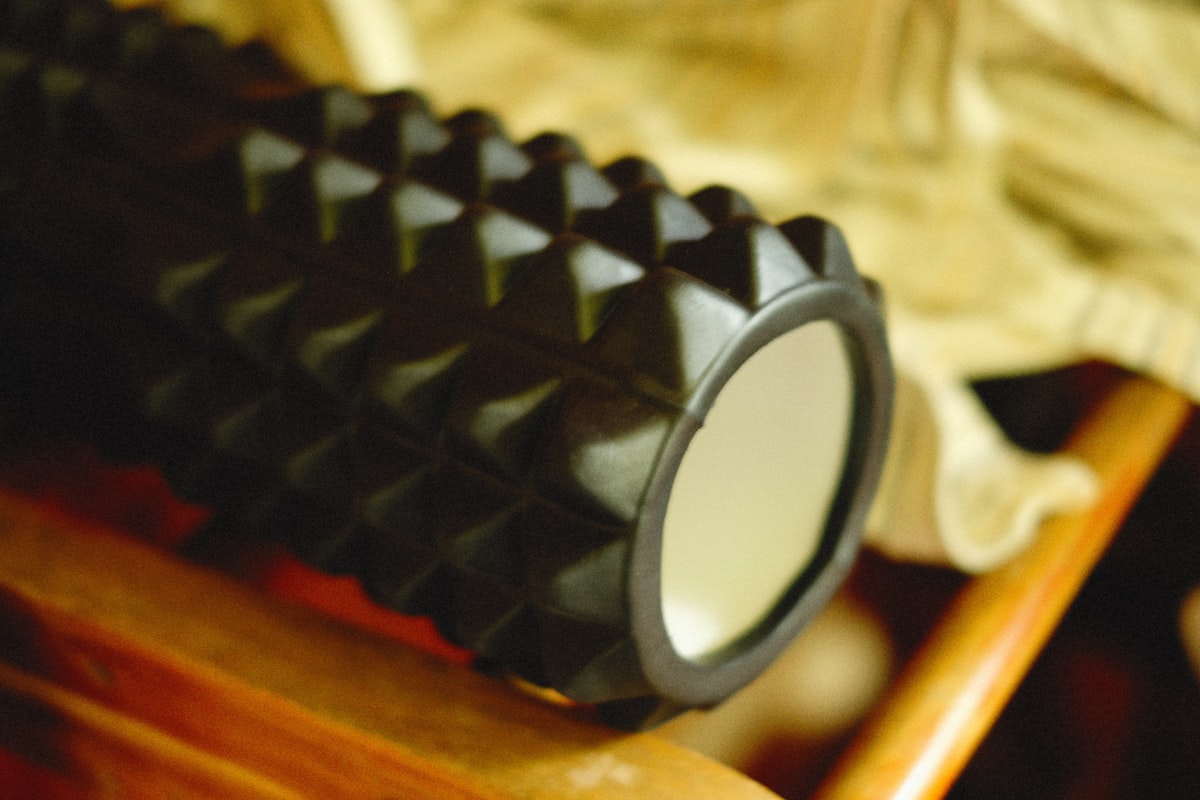
This is perhaps the best surprise of this literature review. A 2019 meta-analysis quantified what the roller used after effort brings:
2019 meta-analysis. The effect on jump performance, however, was negligible. The authors describe the overall effect as minor, but relevant for reducing the sensation of pain.
Two individual studies go in the same direction: in 2015, foam rolling clearly improved quadriceps pressure sensitivity and limited the drop in sprint, power, and strength endurance; in 2014, it reduced muscle soreness at all measurement points while improving range of motion and jump height at 48 hours.
Compression clothing
A 2014 meta-analysis finds a moderate effect on them, and — a rare fact in this article — on performance as well, not just on soreness.
| What was measured | Effect size (2014 meta-analysis) |
|---|---|
| Recovery of explosive power | 0.487 |
| Recovery of maximal strength | 0.462 |
| Creatine kinase (marker of muscle damage) | 0.439 |
| Severity of delayed onset muscle soreness | 0.403 |
To be tempered: a 2010 study on sprinting and plyometric exercises found only minimal effects on performance, with no significant difference on concentric strength or sprinting. Only perceived soreness at 24 hours was reduced.
The costly mistake: anti-inflammatories
Here is the real trap of this article. A 2002 study gave either a placebo, ibuprofen (1,200 mg per day), or paracetamol (4,000 mg per day) after intense eccentric exercise, and measured muscle protein synthesis.
In the placebo group, protein synthesis increased by 76%. In both medicated groups, it remained unchanged — the muscle-building response was suppressed. And the worst part: neither ibuprofen nor paracetamol reduced perceived muscle soreness or creatine kinase compared to the placebo. You lose the anabolic response without even gaining relief.
In all fairness, the literature is not unanimous. A 2011 study in elderly individuals found the opposite: combined with training, paracetamol and ibuprofen produced more muscle volume (+12.5% and +10.9%) and strength (+19 kg) than the placebo. Different population, different duration — the debate is not settled. But popping an anti-inflammatory out of reflex after every training session is not a neutral decision.
And what about supplements?
Only one stands out with a meta-analysis to its name: citrulline significantly reduces perceived exertion and muscle soreness at 24 and 48 hours post-exercise — without changing blood lactate levels, however. The details of the trials are on the citrulline malate supplement page.
What relieves soreness best is free
The 2003 review states it bluntly: exercise is the most effective method to temporarily relieve the pain of delayed onset muscle soreness. Moving the sore muscle makes the sensation go away — for the duration of the effort, at least.
The practical advice that goes with it is just as simple: for 1 to 2 days after a training session that caused delayed onset muscle soreness, reduce the intensity and duration of your workout, or work other body parts.
In summary
| Method | Effect on soreness | Effect on actual recovery |
|---|---|---|
| Moving, at reduced intensity | The most effective (temporary relief) | Allows you to keep training |
| Foam rolling | Real but small effect | Slight gain on strength and sprinting |
| Compression garments | Moderate effect | Moderate effect on strength and explosive power |
| Massage | About 30% less pain | No effect on strength |
| Cold bath | Slight benefit (11-15 °C, 11-15 min) | No objective effect over 96 h |
| Stretching | No effect at 24, 48 nor 72 h | None |
| Anti-inflammatories | No benefit in the 2002 study | ⚠️ Protein synthesis suppressed |
The common point of almost all these methods deserves to be stated clearly: they act on how you feel, much less on what your muscle does. That is not nothing — feeling less discomfort allows you to get back to training faster. But none of them replaces managing your progression.
Severe muscle soreness most often comes from a load or volume that has jumped suddenly. A progressive program written in advance remains the best prevention.
See my programsAnd if you want to know how far to push a set without wrecking yourself for three days, we talk about it in sets, reps or time under tension.
Every figure in this article comes from a study you can open: the underlined mentions lead to the work from which the result is drawn. These summaries are written solely from the abstract. This content is informative and does not replace medical advice: for any question about taking a medication, speak to a pharmacist or a doctor. Sharp, localized pain or pain that lasts beyond a few days is not ordinary soreness and deserves professional advice.