Free weights or machines: which build the most muscle?
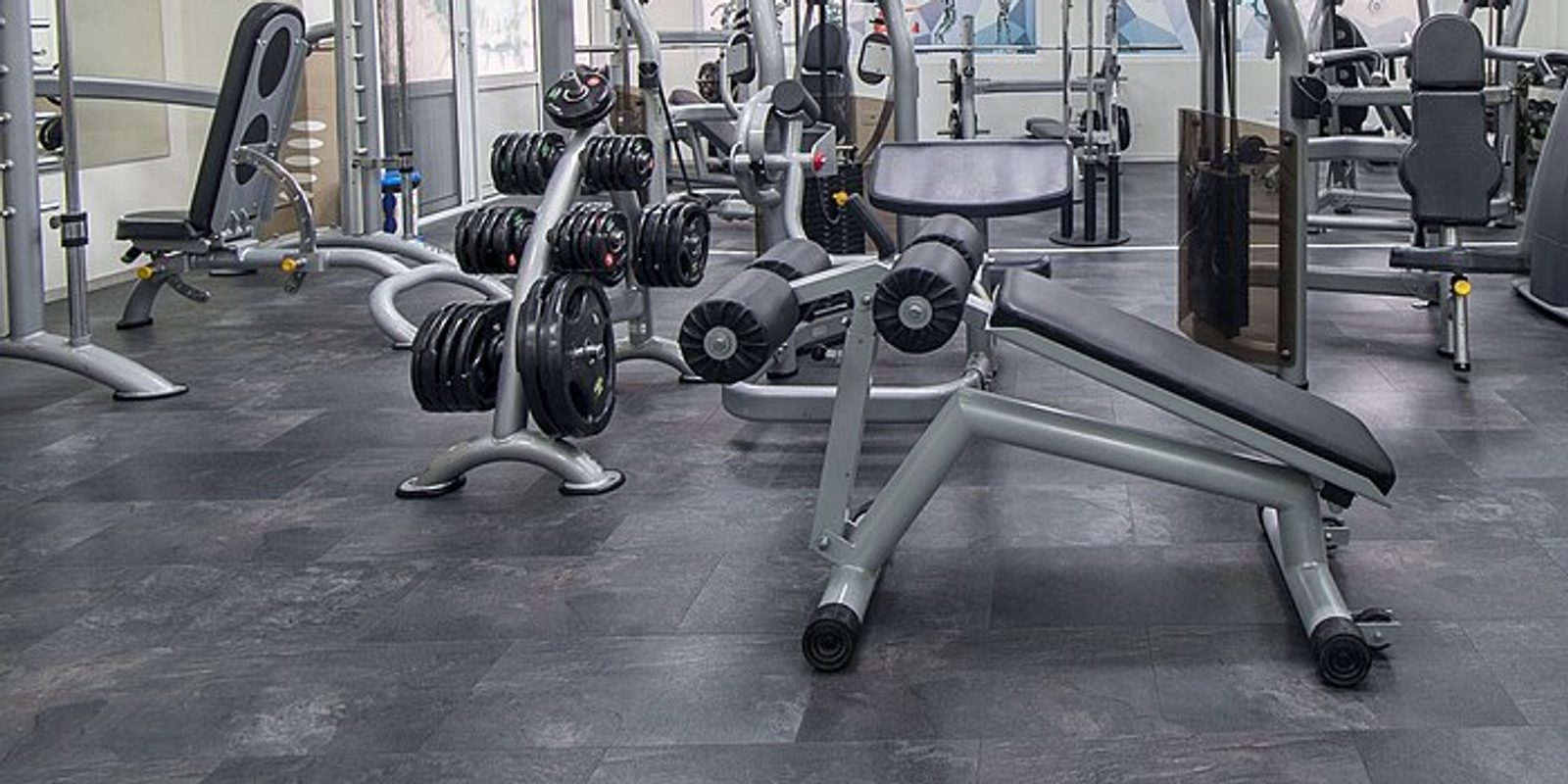
Shixart1985 · CC BY 2.0 (recadrée)
Barbell and dumbbells, or guided machines: which build the most muscle? Neither: two meta-analyses find no difference in muscle gain. Strength, however, improves mostly on the equipment you train with: you get stronger on the barbell by training with the barbell, and stronger on the machine by training with the machine. The rest (jumping, hormones, muscle activation) changes little or does not alter the outcome. Here is what nineteen studies measure.
"Free weights" refer to the barbell, dumbbells, and anything you have to stabilize yourself. "Machines" refer to guided equipment: leg press, chest press, and the Smith machine (a barbell sliding on rails). Regarding how to perform each movement, there is full or partial range of motion; regarding the number of repetitions, Sets, reps, or time under tension.
What the reviews say
A 2022 meta-analysis compares muscle size, strength, and power. For hypertrophy, the difference is nil (effect size −0.01), and for power as well (−0.049). Strength depends on the test: free-weight training wins when strength is measured with free weights (0.655), machine training wins when measured on a machine (0.784). The authors advise choosing the exercise you prefer for muscle and overall strength.
A second meta-analysis, in 2023, reaches the same conclusion: no difference in hypertrophy, strength measured in direct comparison, or countermovement jump. Each group progresses a bit more on the tool they practiced, and the choice, the authors conclude, depends on individual preferences.
For muscle: a tie
In trained men, eight weeks of free weights or machines caused all measured muscles to grow in both groups. The differences in strength (1.8% at most) and muscle size (2.0% at most) between the two are negligible, and joint pain was no more frequent on one side than the other.
Same result in beginner men, who trained for ten weeks on machines, free weights, or both: all gained in measurements, strength, and functional capacity, with no difference between groups. In untrained women, nine weeks of lunges or inclined leg press thickened the quadriceps equally (for example +24.8% and +27.3% for the rectus femoris). And in another trial, the biceps and quadriceps grew with no difference between free weights and machines.
For strength: the one you practice
Strength follows the rule of specificity. In the squat and bench press, eight weeks with a free barbell or Smith machine made muscles grow equally, but gains were clearer when the test was performed on the training equipment. In the machine bench press, the machine group progressed by 13.9%, compared to 8.6% for the free-weight group.
In 32 highly active seniors, followed for 26 weeks, both groups gained strength and endurance. The free-weight group achieved higher percentages in the legs and triceps, and rated their program better (enjoyment, motivation, daily utility), but the authors do not conclude an overall superiority of free weights.
In %. Trial in 32 elderly individuals; the authors do not conclude an overall superiority of free weights
In a nursing home, three months of machine or free-weight training improved chair rises and the "Timed Up and Go" test in both groups, with no difference between them, and an adherence rate of 87.5%.
For jumping and sprinting: no clear winner
In 120 men, eight weeks of barbell squats improved maximal load and two jump tests, whereas the leg press only improved maximal load: the difference between the groups lay in the jump. But in active women, machine squat increased jump power more, while vertical jump, 30-meter sprint, and changes of direction progressed equally in both groups. In trained men, neither vertical jump, leg anaerobic capacity, nor muscle architecture depended on the equipment. An eight-week trial also sees no change in how force is applied to the ground, regardless of the squat performed.
What changes during the session
Free weights make certain muscles work harder during the exercise. In the squat, average electrical activity of the muscles was 43% higher with the free barbell than on the Smith machine (49% higher for the vastus medialis). In the bench press, the lateral deltoid worked harder with the free barbell. In bodybuilders, the triceps and lateral deltoid were more solicited in the free bench press than on the chest press machine, which the authors attribute to bar instability.
Regarding heart and blood vessels, in trained practitioners, a machine or free-weight session modified blood pressure, cardiac output, and vascular function in the same way.
Did you know?
Your machine record is not your barbell record
The limits, still
In short
| Your question | What the studies say |
|---|---|
| Which one builds the most muscle? | Neither: two meta-analyses find no difference |
| Which one builds the most strength? | The one you train and test yourself on |
| Beginner? | Machines, free weights or both: same progress in ten weeks |
| Senior? | Both improve strength and chair rise; enjoyment can tip the scale |
| Jump higher? | One trial for the free squat, another for the machine: no winner |
| Changing tools? | Lower the load: your machine maximum is higher than the barbell's |
Since the muscle grows just as much, choose what you will do consistently. The exercise library shows the execution of movements with both barbell and machine, the 1RM calculator helps you start over with a good load when you change tools, and the workout generator offers you a routine according to your level.
Barbell, dumbbells or machines: start with a routine adapted to your level.
Create my routineEvery figure in this article comes from a study you can open: the underlined mentions lead to the summary of the work it is taken from, written from the abstract alone. Informational content, which does not replace the advice of a healthcare professional.