Full or partial range of motion: which builds the most muscle?
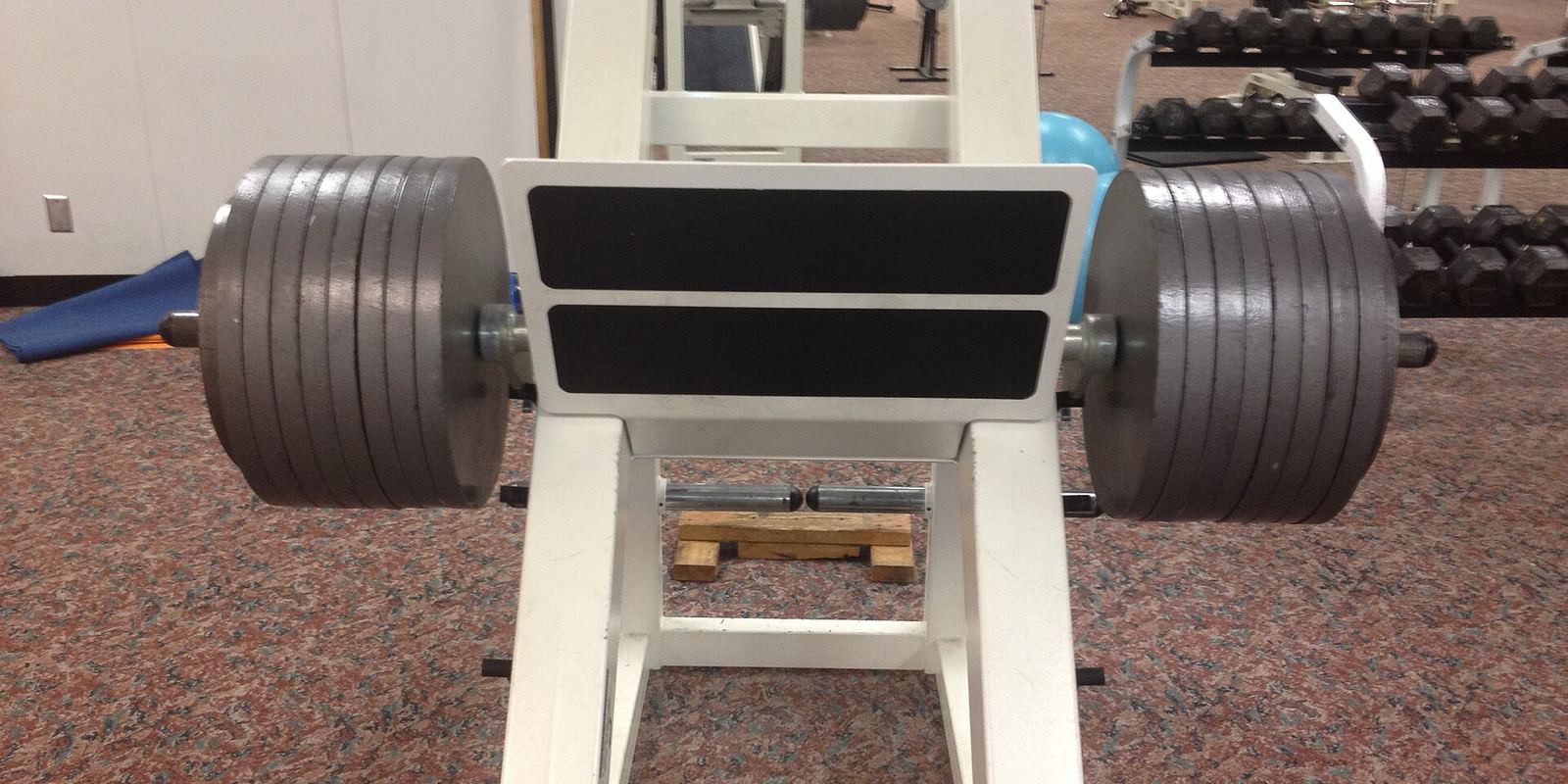
Paulmcdonald · CC BY-SA 4.0 (recadrée)
Should you go all the way down on every strength training repetition? Yes, full range of motion remains the safest choice: it builds more strength than half-movement, and more leg muscle. But recent trials show that what matters most is the part of the movement where the muscle is stretched. Half-repetitions done in this zone perform about as well as the full movement; those done in the zone where the muscle is shortened perform significantly less. Here is what twenty-two studies measure.
“Range of motion” is the path traveled by the joint during a repetition: a squat going down thighs below horizontal versus a half-squat, an arm-extended curl versus a curl that stops halfway. For the number of repetitions and tempo, there is Sets, repetitions, or time under tension; for rest, rest time between sets.
What the syntheses say
The 2021 meta-analysis brings together sixteen studies: full range of motion builds more strength than partial range of motion (effect size 0.56) and more lower limb muscle (0.88). On muscle thickness and its architecture (fiber angle and length), however, neither clearly wins.
A 2023 systematic review refines the answer: the full movement or the half-movement done in the first part, where the muscle is stretched, give more muscle for several muscle groups, including the quadriceps and biceps. It even suggests combining the two.
Full range of motion versus half-movement
In young men trained for ten weeks in curls, strength increased by 25.7% with the full movement compared to 16.0% with the half-movement; the thickness of the elbow flexors increased in both groups (+9.65% and +7.83%). On the bench press, in trained men, the full movement gave the best gains across the three versions tested, and the more the range of motion narrowed (two thirds, then one third), the smaller the progress.
In the legs, the difference is also visible in muscle size. After 12 weeks of heavy squatting, the group that went deep had gained more cross-sectional area at the front of the thigh (4 to 7%) than the one that stopped high, and jumped better. In another trial, the cross-sectional area of the lower quadriceps increased by 59% with the long range of motion versus 16% with the short range of motion.
A Japanese trial on squat depth nuances the picture: the full squat increased the one-rep max on the full squat by 31.8%, compared to 11.3% for the half-squat, and grew the glutes more (+6.7% vs. +2.2%) and adductors (+6.2% vs. +2.7%). But the quadriceps grew just as much in both groups, and neither the rectus femoris nor the hamstrings moved, regardless of depth.
What matters: the stretched position
A series of trials split the movement in two to see which half does the work. On the leg extension, in untrained women, the half where the knee is most bent (stretched quadriceps) gave more muscle in several regions of the thigh than the other groups, including full movement; the half where the knee is almost straight did no better than no training in certain regions. A similar trial finds the same order: stretched half, full movement, and alternating both give the highest increases (13.2 to 17%), more than the shortened half.
On the curl, in young women, working the first half of the movement (elbow almost straight, stretched biceps) gave more muscle in the lower biceps than the second half, and more strength on the full movement. In the calf, in a 2023 trial, the half-movement done heels down (stretched calf) thickened the medial gastrocnemius by 15.2%, compared to 6.7% for the full movement and 3.4% for the half-movement done heels up.
In %. 2023 trial in young women, heel raises
Exercise choice plays the same role. Over 12 weeks, the seated leg curl, which stretches the hamstrings, made them grow by 14% compared to 9% for the lying leg curl. Standing calf raises, leg straight, made the lateral gastrocnemius grow by 12.4%, compared to 1.7% seated, knee bent; the soleus, which does not stretch further standing, progressed equally in both positions.
Did you know?
Stretched half-repetitions versus full movement
If the stretched half does the heavy lifting, should you abandon the full movement? Trials in trained practitioners say it doesn't change much. Over 8 weeks, stretched half-repetitions and full repetitions gave the same arm muscle thickness and strength endurance. A multi-site trial, 12 weeks, concludes with "small and practically equivalent" effects on arm and thigh muscle cross-sectional area.
On the leg press, in trained individuals, descending to 100 degrees of knee flexion or to everyone's maximum (about 154 degrees) grew the quadriceps just as much. And adding stretched half-repetitions after muscular failure, at equal volume, built no more calf: +8% in both cases.
The half-movement to load heavier
Not all studies agree
In short
| Your question | What the studies say |
|---|---|
| Full range of motion or half-movement? | Full: more strength, more leg muscle (meta-analysis of sixteen studies) |
| Which half matters most? | The half where the muscle is stretched; the one where it is shortened does the least |
| Stretched half-reps? | About as much as the full movement in trained individuals |
| Deep squat or half-squat? | Deep: more glutes and adductors; quadriceps the same in one trial, more in another |
| Choosing your exercises | Seated leg curl, overhead triceps extension, standing calf raise: more muscle |
| Shorten to lift heavier | Less progress on the bench press with each reduction in range of motion |
Going all the way down often forces you to lower the load a bit. The 1RM calculator helps you choose your loads and track your strength, the workout generator offers you a routine based on your level, and the exercise library shows the execution of each movement.
Exercises, sets, reps: start from a workout plan adapted to your level.
Create my workout planEvery figure in this article comes from a study you can open: the underlined mentions lead to the summary of the work it is drawn from, written based solely on the abstract alone. Informative content, which does not replace the advice of a healthcare professional.