Muscular failure: should you go to the limit on every set?
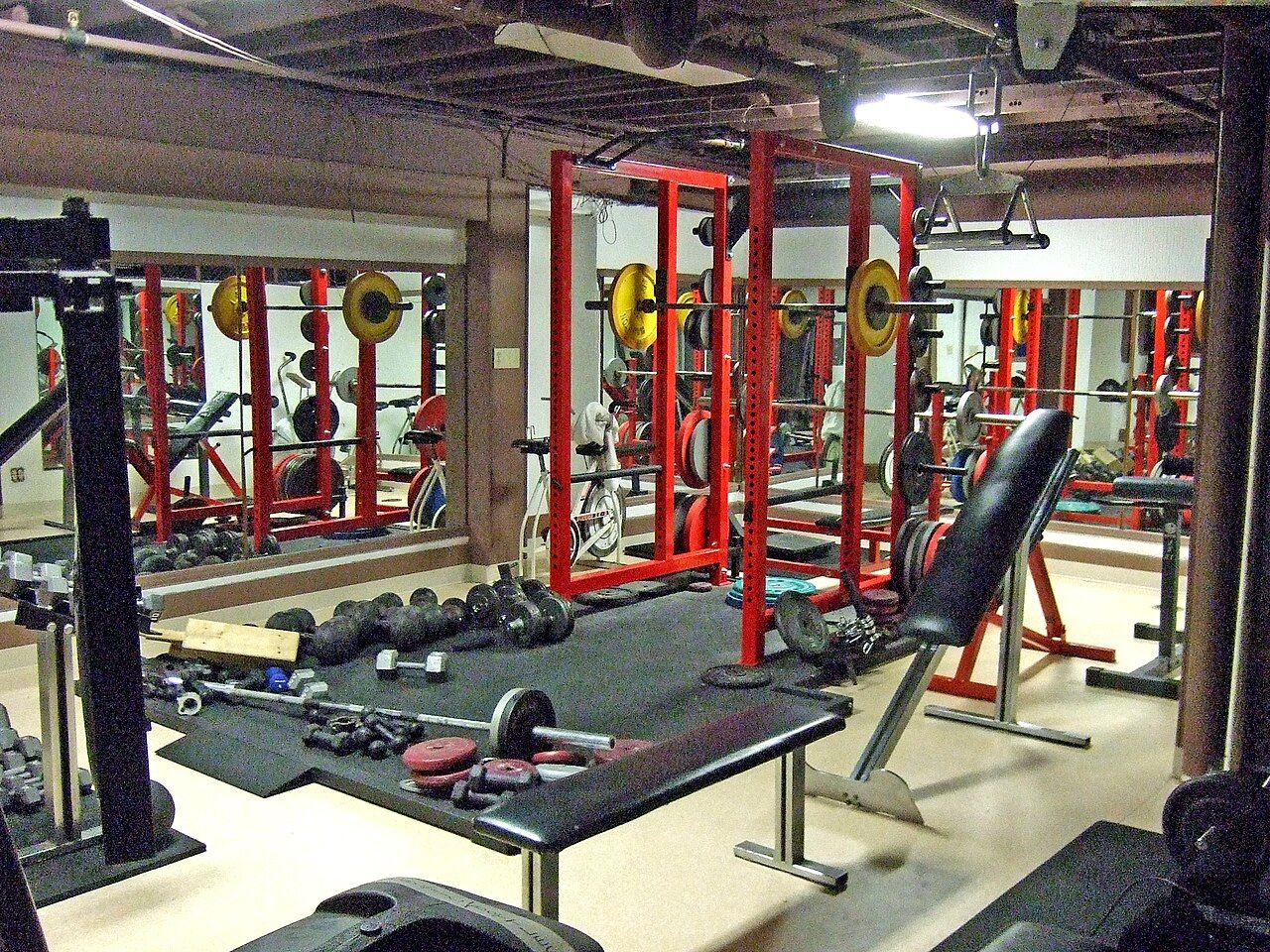
James Steakley · CC BY-SA 4.0
Should you push every set until you can no longer perform a single repetition? No. For strength, it brings nothing; for muscle, stopping one, two, or three reps short of failure yields almost as much, with significantly less fatigue. Failure is only truly useful with light loads. Here is what twenty-two studies measure.
For strength: failure does not do better
Meta-analyses agree on this point. A first one, in 2016, on 8 studies, even finds a small advantage for sets stopped before failure: 0.6 to 1.3% more strength gained, a gap that authors deem of no practical importance. Out of 15 studies, no difference in strength between the two ways of training; out of 13 studies, no more. The most recent one, in 2026, brings together 20 randomized trials and 556 participants: dynamic strength (lifting a load) progresses slightly more without going to failure, and nothing changes for isometric strength, muscle, muscular endurance, or power.
In a 16-week trial on 42 active men, both groups gained exactly as much on the bench press (23% and 23%) and the squat (22% and 23%). Those who did not train to failure subsequently gained more leg power during the final preparation phase; those who went to failure, more reps on the bench press. A 2024 meta-regression, which estimates the number of repetitions left in reserve in each study, concludes that strength progresses in the same way over a wide range, whether one stops far from or close to failure. To track your strength without going to the limit of every set, the 1RM calculator estimates your maximum load from a set (weight × repetitions), without having to attempt it.
For muscle: almost as much by stopping a little before
Here, the answer is more nuanced. The same meta-regression finds that muscle grows a little more as sets finish close to failure, specifying that the analysis is exploratory. A meta-analysis of 15 studies sees a "trivial" advantage when gathering all definitions of failure, and no advantage when comparing true failure, the one where the next repetition is impossible, to sets stopped before. In already trained practitioners, failure gives a small advantage for muscle.
Recent trials in trained practitioners go in the same direction. In 18 trained individuals, one leg taken to failure and the other stopped at 1 or 2 reps from failure gained the same quadriceps thickness in 8 weeks (0.181 and 0.182 cm). In 19 trained adults, one arm to failure and the other at 1 to 3 reps in reserve gained as much muscle and strength on the curl. In a single-set-per-exercise program, in 42 trained men and women, several muscle measures leaned slightly towards failure, with modest gaps, and strength progressed just as much.
2020 trial, 14 trained practitioners
In this trial on 14 trained practitioners, both legs progressed similarly: the differences on the graph are not significant. Details on the number of sets and repetitions are in the article sets, repetitions and time under tension.
With a light load, failure matters more
In 25 beginner men, at equal volume, a heavy load (80% of 1RM) made the quadriceps grow just as much with or without failure (8.1% and 7.7%). With a light load (30% of 1RM), only the leg taken to failure really progressed: 7.8%, against 2.8% without going to the end, a non-significant gain. With a light load, effort matters more than total volume.
Not all trials confirm this. In 32 beginner men, stopping when you choose to stop gave as much muscle and force in 12 weeks as failure, with heavy as well as light loads. In 41 people aged 60 to 77 trained at 40% of 1RM, failure added nothing to strength or walking speed, but no group gained measurable muscle. The article blood flow restriction training shows another way of working light.
Volume matters more than failure
In 89 young women, three groups did curls at 70% of 1RM for 10 weeks. Strength progressed equally everywhere (26.8 to 28.3%). Muscle, on the other hand, grew with failure (17.5%) and without failure but with one extra set to equalize volume (8.5%), but not in the group doing fewer total repetitions. In 52 older men, the same observation: muscle only progressed in the two groups doing the most total repetitions, failure or not, and the authors deem volume more important than failure. In 10 beginner men, with the same total number of repetitions, failure and non-failure gave as much strength and muscle in 14 weeks.
Did you know?
The price of failure: fatigue and recovery
A meta-analysis of 12 crossover studies finds that a training session taken to failure causes a greater drop in jump height, speed, and strength right after, raises lactate by 4.48 mmol/L more, and leaves more markers of muscle damage 48 hours later. A review of 51 studies adds that fatigue rises as one approaches failure, especially with light loads and high volume.
In 10 trained men, three sets of 10 repetitions to failure required significantly longer recovery than six sets of 5 with the same load, yet the same volume: recovery remained slower up to 24 to 48 hours after the session. In 12 women, squat sets stopped before failure allowed almost as many total repetitions (24.5 against 26.3) with less perceived effort and discomfort.
All to failure, every session: bad math
The limitations, all the same
In short
| Your question | What the studies say |
|---|---|
| Does failure build more strength? | No, rather slightly less when volume is not equalized |
| Does it build more muscle? | A tiny bit, especially close to failure; 1 to 3 reps in reserve yield almost as much |
| And with a light load? | There, going close to failure matters more |
| What matters most? | Total volume: enough sets close to failure |
| What is the cost? | More fatigue, slower recovery up to 24 to 48 hours |
In practice: stop most of your sets at one, two, or three reps shy of failure; if you work with a light load, go closer to failure; and if you stop earlier, add a set to keep the same volume. The workout generator builds you a program for your week.
Compose your training week, then stop your sets at one, two, or three reps shy of failure.
Generate my workoutEach number in this article comes from a study you can open: the underlined mentions lead to the summary of the work it is drawn from, written based solely on the abstract. The trials are small and short, mostly in young, healthy adults. Informative content, which does not replace the advice of a healthcare professional.