Blood flow restriction training (BFR): muscle with light loads?
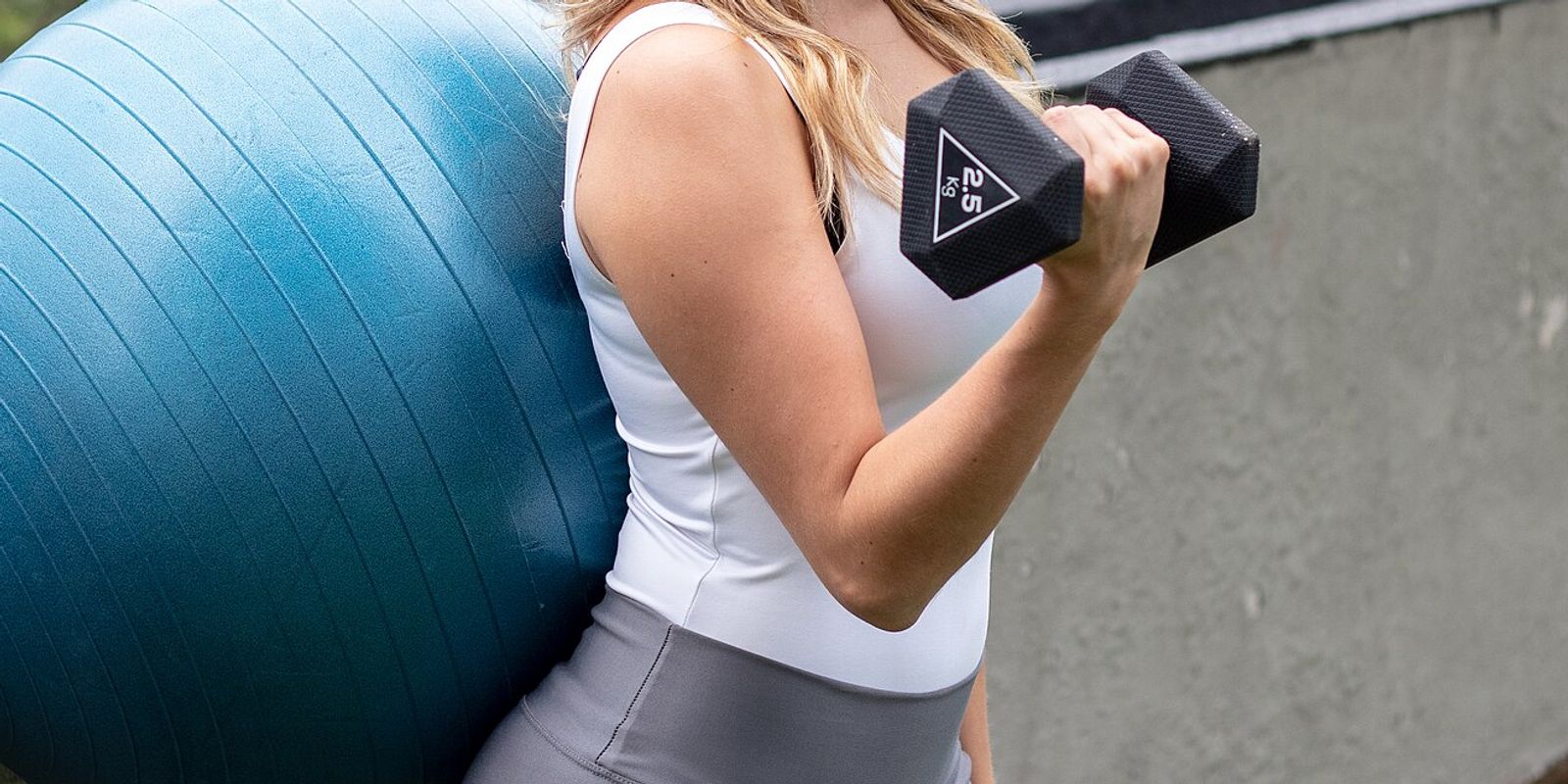
PTPioneer · CC BY 2.0 (recadrée)
Does training with a cuff inflated around the arm or leg work? For muscle, yes: with light loads, the cuff makes the muscle grow almost as much as heavy loads. For strength, heavy loads remain ahead. The method has its discomforts and a few rare risks. Here is what twenty-two studies measure.
Blood flow restriction training (BFR in English, "KAATSU" in Japan, often called "occlusion" in the gym) consists of inflating a cuff around the trained limb to slow down venous blood return, then lifting light loads. In trials with athletes, cuff pressure ranged from 110 to 240 mmHg. If you are first wondering how many weight training sets and repetitions to perform without a cuff, the answer is in Sets, repetitions, or time under tension.
Muscle: almost as much as with heavy loads
A meta-analysis compares heavy loads to light loads with a cuff: both build the same amount of muscle mass, regardless of cuff pressure or width. In older adults, the same observation: a similar muscle gain (0.21 difference, non-significant).
Compared to the same light loads without a cuff, the cuff makes a difference. A 2012 meta-analysis gives it a greater effect on strength (effect size 0.58) and muscle size (0.39). It works better with weight training than with walking, and two to three training sessions per week do better than four to five.
A trial on 40 young people takes the logic to the end: knee extensions to muscular failure, at 15% of maximum without a cuff, with a moderate cuff, or with a tight cuff, versus 70% of maximum. Eight weeks later, muscle size and strength (except for a one-rep maximum) progressed similarly across all groups, with a slight overall advantage for heavy loads. The tighter the cuff, the less work was needed to obtain the same result.
Strength: heavy loads keep the advantage
The same meta-analysis is clear: heavy loads increase maximum strength more than light loads with a cuff. In older adults, the gap is -0.42 to the detriment of the cuff; in rehabilitation as well, heavy loads do better (0.674), even though the cuff performs better than light loads alone (0.523).
Gain in %, 23 older adults, knee extensions
These figures come from a trial in 23 older adults: about the same muscle gained, but strength increasing about three times more with heavy loads. To set your loads as a percentage of your maximum, the 1RM calculator does the math.
In the trained athlete, a little extra
A 2024 meta-analysis finds that training status changes everything: beginners gain as much muscle and more strength with heavy loads, whereas trained individuals might gain more with the cuff. In a review of 10 studies in athletes, the cuff added to regular weight training increased strength in 7 out of 9 studies, and muscle size in 4 out of 8.
In 32 university American football players, four sets of weight training at 20% of maximum with a cuff, in addition to their strength training, resulted in gains of 7.0% in the bench press and 8.0% in the squat, more than with the same sets without a cuff. In 20 semi-professional rugby players, three weeks of 5 sets of 5 repetitions at 70% of maximum, with a cuff inflated to 180 mmHg, yielded 5.4 kg on the bench press and 7.8 kg on the squat, compared to 3.3 kg and 4.3 kg without a cuff. In 20 trained men, the cuff placed on the biceps during a periodized program made the muscle grow as much as heavy training.
Did you know?
Seniors, cardio and rehabilitation
In older adults, adding a cuff to light loads or walking significantly improves strength progression (effect sizes 2.16 and 3.09), and walking with a cuff also builds muscle (1.82). In 30 older men, eight weeks with a cuff increased muscle size by 6.7% with a collagen hydrolysate and 5.7% with a placebo, a non-significant difference; isometric strength did not move more than in the controls. For traditional weight training at this age, there is Weight training after 60.
Across 14 cardio studies with a cuff, aerobic capacity and performance improve in young adults, with pressures of at least 130 mmHg; in older individuals, performance improves but not aerobic capacity. A 2019 position stand also devotes a section to the use of the cuff without exercise, to prevent muscle wasting.
The cuff is not without risk
After exertion, the picture reverses: blood pressure drops lower than after a session without a cuff, and in elderly people resting systolic pressure is about 6.6 mmHg lower thirty minutes later. During exercise, in these seniors, heart rate and blood pressure rise just as much as with heavy loads. Regarding perception, when going to muscular failure, discomfort is greater with the cuff than with heavy loads.
The limits, all the same
In short
| Your question | What the studies say |
|---|---|
| Muscle with light loads? | Yes: almost as much as with heavy loads |
| And strength? | Heavy loads do better |
| Better than light loads without a cuff? | Yes, for strength as well as for muscle |
| For a trained athlete? | A small extra strength gain in several trials |
| With proteins? | No clear difference with collagen |
| How many sessions? | Two to three per week do better than four to five |
| Any risks? | Higher blood pressure during exercise; tingling, aches; rarely rhabdomyolysis or thrombosis |
The cuff does not replace a program: to build one according to the number of days you have available, the training session generator takes care of it, and the 1RM calculator gives you your loads as a percentage of your maximum.
20% or 70% of your maximum: first calculate your maximum on a single repetition.
Calculate my loadsEvery figure in this article comes from a study you can open: the underlined mentions lead to the summary of the work it is taken from, written from the abstract alone. Informative content, which does not replace the advice of a healthcare professional: if you have a blood pressure or circulation problem, or are undergoing treatment, talk about it before trying a cuff.