When to take your supplements: morning, evening, before or after the session?
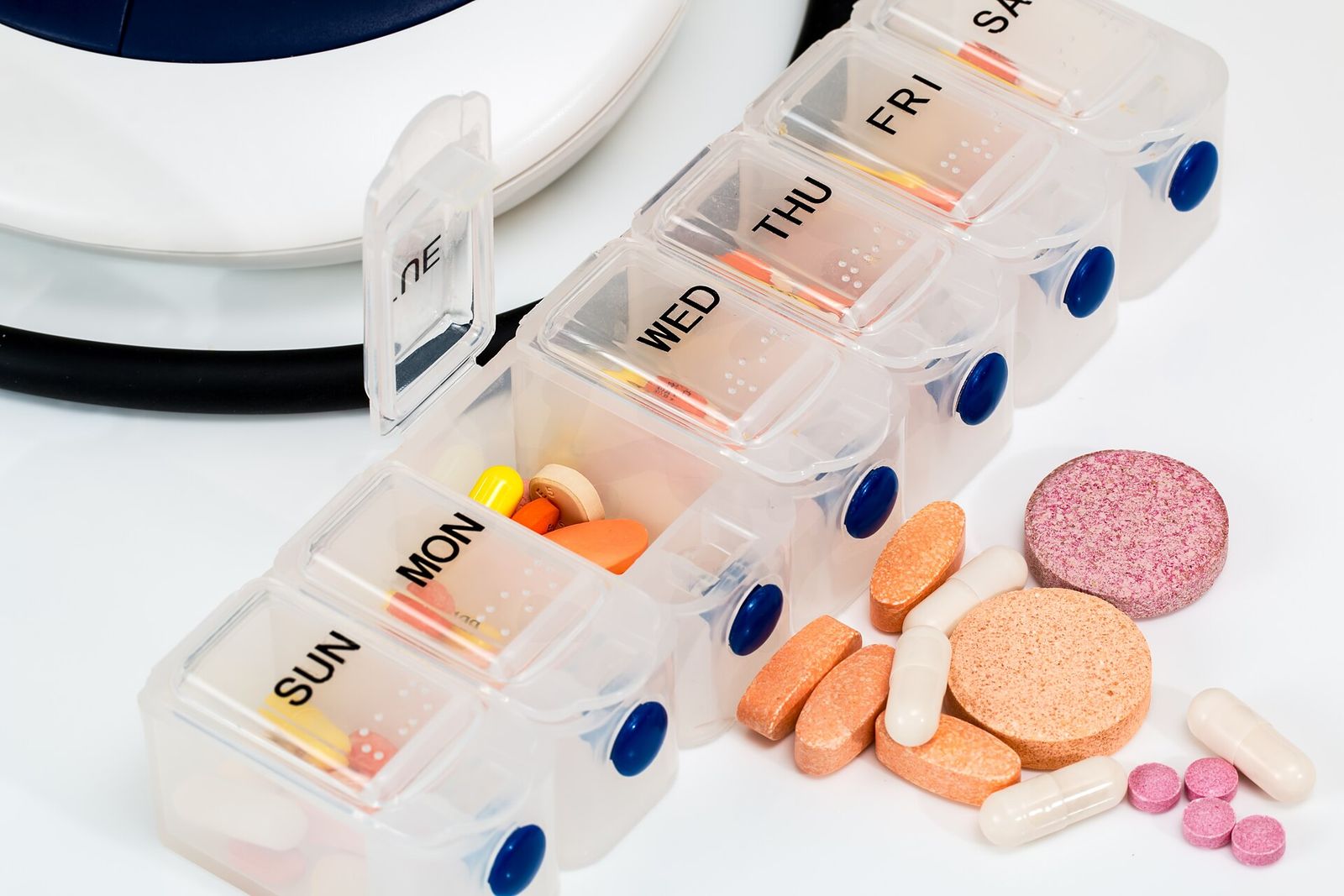
Stevepb · CC0
Morning or evening, before or after the training session, fasting or with a meal: for most supplements, studies do not find a magical time. For a few, however, the timing truly changes what you absorb or how you sleep — iron, caffeine, vitamin D, and beta-alanine leading the way. Here is what twenty-one studies measure, supplement by supplement.
Creatine: before or after, it doesn't matter
This is the big question about creatine, and the answer is disappointing. In the most cited trial, 19 weightlifters took 5 g of creatine right before or right after their training session for four weeks. Both groups gained muscle and strength; the post-workout group gained 2.0 kg of lean mass against 0.9 kg, but no statistical difference between the groups emerged — the authors conclude a "possible" advantage by another inference method.
In older adults, over twelve weeks, 0.1 g/kg of creatine before or after the training session yielded the same gains in lean mass, muscle thickness, and strength. Two recent reviews take stock: the 2021 one sees clues in favor of the post-workout, but judges that trial limitations prevent any solid conclusion; the 2022 one considers that the effect of timing "remains unclear". The idea that it must be taken close to the training session comes mainly from a 2008 review that put it forward as a hypothesis.
In practice: no trial shows that one time does better than another. Take it when you won't forget it.
Caffeine: the time affects the training session... and your night
For caffeine, the timing matters in both directions. On the performance side, your strength is naturally lower in the morning. In twelve highly trained men, the late-afternoon training session under placebo yielded 3.0 to 7.5% more strength and power than the morning one; 3 mg/kg of caffeine in the morning raised strength and power by 4.6 to 5.7%, to the level of the afternoon.
A second trial, at 6 mg/kg taken 60 minutes before, confirms that morning caffeine erases the drop in execution speed, especially on the lower body. But taken in the late afternoon, it added almost nothing to performance — and caused reported adverse effects to soar.
On the sleep side, 400 mg taken at bedtime, 3 hours or 6 hours before all disrupted the night compared to placebo. Even at 6 hours, the loss of sleep time was clear enough for the authors to recommend avoiding a large dose within the 6 hours preceding bedtime.
Did you know?
If you train in the evening and sleep poorly, this is the first dose to move. Everything else on dosage and habit is in our article on caffeine before weightlifting.
Iron: every other day, in a single dose
Iron is the case where rhythm matters the most. One dose raises hepcidin, the hormone that shuts the door to iron absorption. In young deficient women, 24 hours after a dose of 60 mg or more, hepcidin was up and the proportion of absorbed iron dropped by 35 to 45%. Six times more iron (from 40 to 240 mg) caused only three times more to be absorbed (from 6.7 to 18.1 mg).
Two randomized trials drew the consequence from this. Given every other day rather than every day, the same iron was better absorbed: 21.8% against 16.3%, meaning 175.3 mg absorbed in total against 131.0 mg. And splitting the dose into two intakes (morning and late afternoon) brought nothing, except a higher hepcidin.
Deficient women, 60 mg of iron per intake — randomized trial
A six-month trial in 150 women checked whether this changed the final result. At equal total dose, ferritin ends up at the same level, but taking it every other day leaves fewer deficient women at six months (3.0% against 11.4%) and causes fewer digestive issues: they are 1.56 times more frequent with daily intake.
For iron, more often is not better
Vitamin D and omega-3s: with a meal containing fat
Vitamin D dissolves in fats, and it can be measured. In 50 older individuals, the same dose taken with a breakfast containing fats yielded a peak of vitamin D in the blood 32% higher than with a fat-free breakfast — and the type of fat changed nothing.
In 32 physicians, a dose taken with a high-fat meal (25.6 g) raised the blood level to 53.7 nmol/L after 14 days, when it was 33.7 nmol/L with an almost fat-free meal (1.7 g). In 17 patients who were not responding to their treatment, simply taking the same vitamin D with the largest meal of the day raised their level by 56.7% in two to three months — a study without a control group, therefore to be read with caution.
Same logic for omega-3s, based on a single old study: taken with a high-fat meal (44 g), EPA from fish oil in triglyceride form was 90% absorbed versus 69% with a low-fat meal, and ethyl esters saw their absorption multiplied by three, to around 60%. The comparison is made with values published previously, not in the same trial.
Beta-alanine: with a meal rather than between them
Beta-alanine works by increasing muscle carnosine over the weeks. In 34 people supplemented for six to seven weeks, calf carnosine increased by 64% when the powder was taken at the beginning of meals, versus 41% when taken between meals. The authors attribute this to insulin released by the meal.
Bicarbonate: a wide window, and the stomach decides
For sodium bicarbonate, trials have looked for the right delay before exercise. In eight men, 0.3 g/kg taken 60, 120, or 180 minutes before repeated sprints provided the same buffering capacity and performance — but digestive discomfort was more frequent at short delays, and less pronounced at 180 minutes.
A 2020 study on 13 men shows that the blood bicarbonate peak does not happen at the exact same time from one occasion to the next in the same person, but that in capsules, at 0.3 g/kg, levels remain high between 75 and 240 minutes post-ingestion in over 80% of people. In eleven trained cyclists, timed to each individual's own peak, bicarbonate saved 8.3 seconds (0.2 g/kg) and 8.6 seconds (0.3 g/kg) on a 4 km time trial. Both results complement each other: timing intake to one's own peak helps, but the window is wide enough to do without it.
Melatonin: a few hours before sleep
In twelve good-sleeping young adults, 0.3 or 1 mg of melatonin taken 2 to 4 hours before usual bedtime shortened sleep onset latency, without changing sleep architecture or leaving a "hangover" effect the next day. The smallest dose was enough to bring blood melatonin back to normal night levels. This is a single trial, on small sample sizes.
The limits, all the same
In summary
| Supplement | Does timing matter? | What the studies say |
|---|---|---|
| Creatine | Little | Before or after the training session: no clear difference |
| Caffeine | Yes | More useful in the morning; disrupts sleep even when taken 6 hours before bedtime |
| Iron | Yes | Every other day, in a single dose: better absorbed, better tolerated |
| Vitamin D | Yes | With a meal containing fats |
| Omega-3 | Probably | Better absorbed with a high-fat meal (one study only) |
| Beta-alanine | Yes | At the beginning of meals rather than between them |
| Bicarbonate | A little | Between 1 and 3 hours before exercise; later, fewer digestive issues |
| Melatonin | Yes | 2 to 4 hours before bedtime, in small doses |
To fit all this into your day without getting the time wrong, My stack organizes your supplements between pre-workout, meals, and the evening, and alerts you to those that do not go together.
Choose your supplements: the tool places them at the right time of day, based on what their fact sheets say.
Organize my stackEvery figure in this article comes from a study you can open: the underlined mentions lead to the summary of the work it is taken from, written solely from the abstract. For protein around training, see our article on the anabolic window. Informative content, which does not replace the advice of a healthcare professional.