Periodization: should you vary your loads to progress?
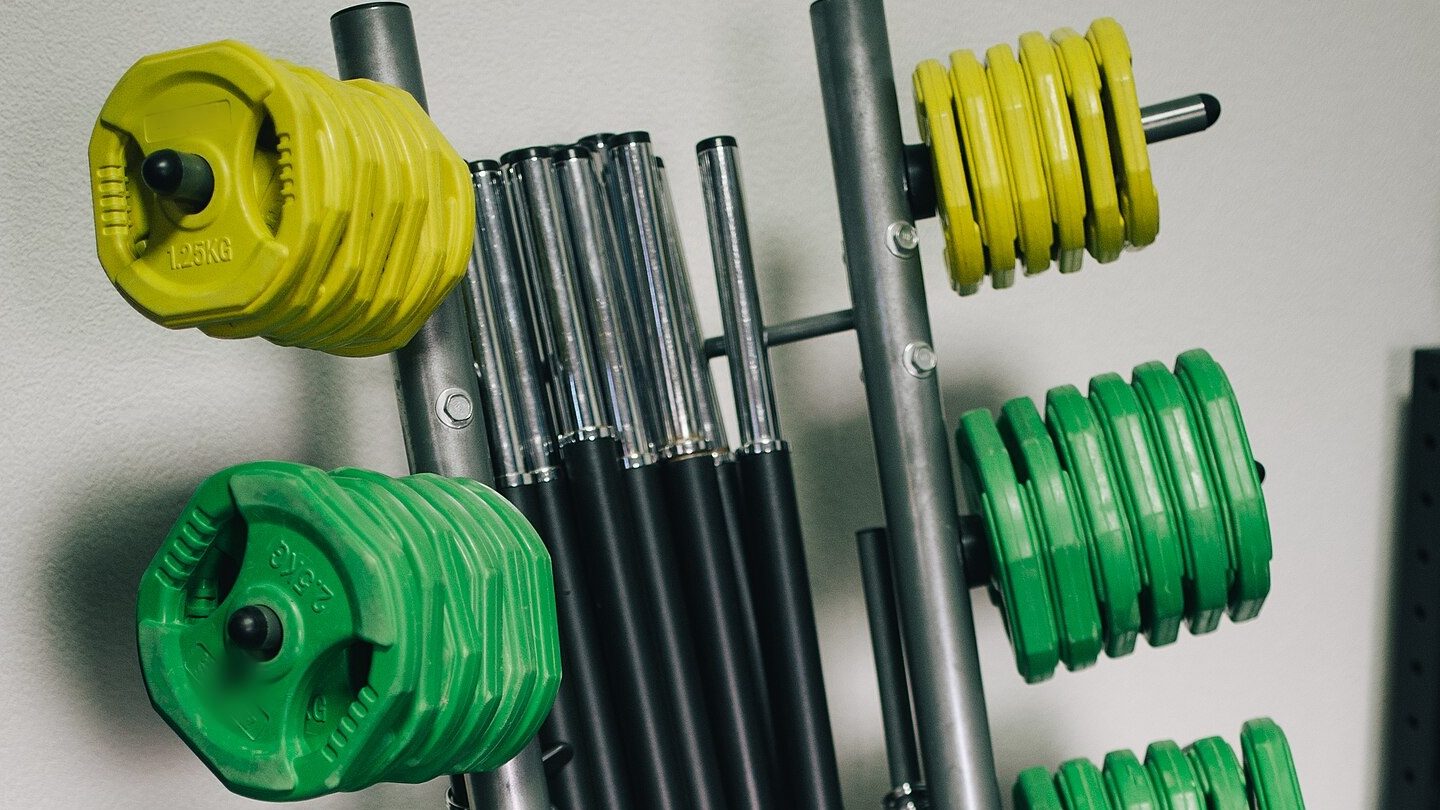
Shixart1985 · CC BY 2.0 (recadrée, marque floutée)
Do you need to change your loads and reps from one week to the next to make progress? For strength, a program that varies according to a plan performs slightly better than a program that stays the same. For muscle, meta-analyses find no difference. And between the main ways to vary, the gap is slim. Here is what twenty-two studies measure.
What is periodization?
Periodization means varying the load and the number of reps according to a plan, instead of repeating the same training session. Researchers mostly compare two models, which a 2002 trial on 20 men illustrates well. In linear periodization, the load increases in steps: sets of 8 repetition maximums for 4 weeks, then 6, then 4. In daily undulating periodization, it changes every training session: 8 reps on Monday, 6 on Wednesday, 4 on Friday. There is also weekly undulating periodization (the load changes every week), block periodization, and autoregulation, which adjusts the load to the day's fitness level.
For strength: a small advantage
A 2017 meta-analysis pools 81 results drawn from 18 studies: a periodized program increases maximum load (1RM) more than a constant program, with an effect size of 0.43, classified as moderate. The advantage is clearer in beginners, and grows with training frequency and study duration.
The figure shrinks when compared at equal work. An older meta-analysis found an overall effect size of 0.84 in favor of periodization, but only 0.25 once the effect of the variation itself was isolated: a good part of the gap came from higher volume, intensity, or frequency in the periodized groups. A 2022 meta-analysis includes only studies where volume is the same in both groups, 35 in all: the advantage of periodization on strength holds, with an effect size of 0.31.
For muscle: nothing extra
On hypertrophy, the same 2022 meta-analysis finds no difference between a periodized program and a constant program (effect size of 0.13, non-significant), nor between linear and undulating (0.05). A 2017 meta-analysis on 13 studies leads to the same finding between linear and daily undulating: a gap of -0.02, in other words zero. The authors of the 2022 study conclude that the advantage on strength is likely due to the nervous system, not the muscle.
In 31 untrained men, six weeks at equal volume increased quadriceps size equally with a constant program (5.1 %), linear program (4.6 %), or undulating program (5.2 %), measured by MRI. In 16 trained men, an undulating program made of sets of 12, 10, and 8 reps and another of 6, 4, and 2 reps, at equal volume, yielded the same gains in strength and muscle thickness in 8 weeks. The authors see volume as the main driver, more than the rep range.
Did you know?
2018 trial, 33 untrained men, MRI measurements
Linear or undulating?
A 2015 meta-analysis on 17 studies and 510 participants finds no difference in strength between the two, in both upper and lower body; only 5 studies out of 17 saw a gap between the groups. A 2026 meta-analysis on 29 studies also concludes comparable effects on physical capabilities and body composition. A nuance comes from the 2022 one: undulating makes you gain more strength (effect size of 0.31), but only in already trained practitioners (0.61); in beginners, no difference (0.06).
Trials go both ways. In 40 trained men, 12 weeks of daily undulating periodization resulted in a 25 % gain on the bench press versus 18 % in linear, and 41 % versus 25 % on the leg press, but the gap between the groups was not significant. In 30 untrained men, undulating yielded more strength on the bench press and curl. In 20 trained men, no significant difference, with slightly larger effects in undulating. And in 28 practitioners followed for 9 weeks, no difference between linear, daily undulating, and weekly undulating.
2009 trial, 40 trained men; gap between groups non-significant
Changing every session is not always better
By blocks, a la carte: only a few trials
In 24 trained men, 15 weeks of block periodization may have slightly improved power and strength on the bench press a bit more than classic periodization, at equal volume; nothing different for the lower body, jumps, or body composition. In 31 track and field athletes, block and daily undulating gained the same amount of strength in 10 weeks, with the block model achieving it with less work. And in 23 American football players, adjusting the load to the day's form improved the bench press and squat more in 6 weeks than a pre-set progression.
After 60, the simplest won
In 42 women aged 60 to 79, 22 weeks at two sessions per week: the constant program improved the jump (+55.7%), the timed up-and-go (43.2% faster), walking speed (+12%), and single-leg balance; the undulating version only improved the up-and-go. Neither changed body composition. In 49 sedentary elderly women, linear and undulating both improved strength and daily life tests, with no difference between them. The article weight training after 60 details what else is gained.
The limits, anyway
In summary
| Your question | What the studies say |
|---|---|
| Does varying according to a plan make you stronger? | A little: an effect size of 0.31 at equal volume (35 studies) |
| And more muscular? | No: no difference in meta-analysis, volume matters more |
| Linear or undulating? | Tie on average; advantage to undulating for strength in trained individuals only |
| Changing every session, is it better? | Not necessarily: two trials give the advantage to linear progression |
| After 60? | A constant program did just as well, or even better, on daily movements |
In practice: if you are a beginner, a simple and regular program is enough, and variation can come after a few months. To set your loads as a percentage of your maximum, the 1RM calculator does the math; to organize your sessions, the workout generator suggests exercises. How many sets and reps to aim for? The article sets, reps, or time under tension reviews it, and how many sessions per week does too.
Knowing your maximum load is the starting point of any program that varies.
Calculate my 1RMEvery figure in this article comes from a study you can open: the underlined mentions lead to the summary of the work it is taken from, written solely from the abstract. The trials are short and focus mostly on young men. Informative content, which does not replace the advice of a healthcare professional.