Creatine: water or muscle?
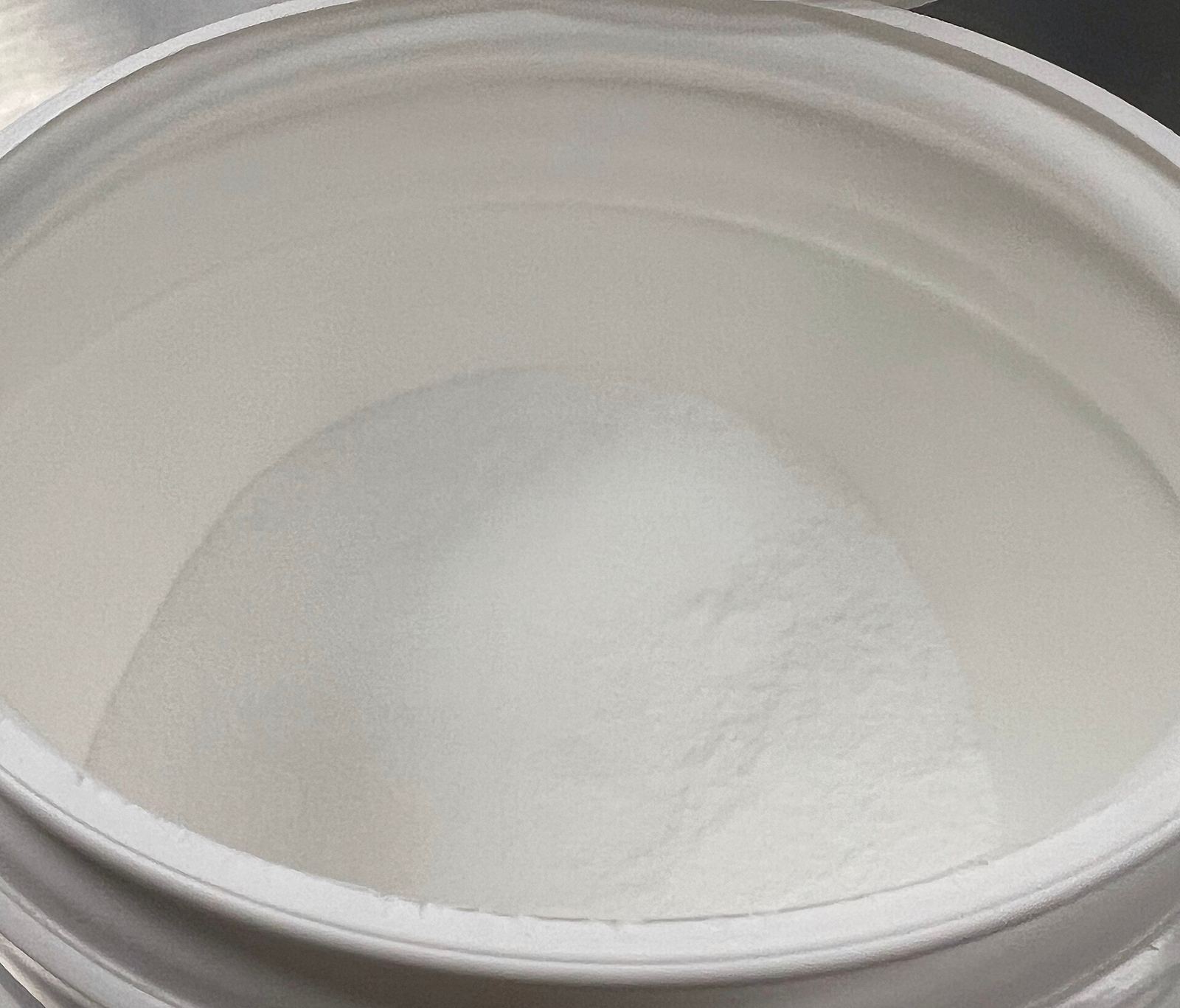
Awkwafaba · CC BY-SA 4.0 (recadrée)
The kilo you put on during the first week of creatine, it is mostly water. Muscle comes next, and only if you train: about an extra kilo of lean mass with weight training, according to meta-analyses. Here is what twenty-two studies measure, from the scale right down to the muscle fibres.
The first week: mostly water
In thirteen young footballers, seven days of creatine at 0.3 g per kilo per day increased body water by 2.3 litres (measured by deuterium dilution), and weight by 1.0 kg compared to placebo. Nothing changed in the placebo group.
Another team looked inside the forearm muscle, using magnetic resonance imaging, after five days at 20 g per day: 1.2 kg more on the scale, and a signal corresponding to more water inside the muscle cells. A meta-analysis of one hundred studies points in the same direction: the effect on lean mass is clearer right after a loading phase than at a maintenance dose.
And that kilo cannot be muscle built in five days: in six men who took 21 g per day for five days, muscle creatine rose by about 30%, but neither muscle protein synthesis nor breakdown changed, either when fasting or after a meal.
Where does this water go?
The image of water puffing you up "under the skin" is not what studies measure. In 32 resistance-trained men and women (25 g per day for a week, then 5 g for three), weight and total water increased, but the distribution between intracellular water and extracellular water did not change.
Over eight weeks of weight training, in 27 trained men, intracellular water increased more with creatine than with placebo, whereas extracellular water increased equally in both groups. Crucially, muscle mass and intracellular water rose together (correlation of 0.71): the ratio between the two did not budge. In other words, water follows the muscle.
In 25 American football players who trained eight hours a week, 28 days of creatine resulted in a 2.42 kg gain compared to 0.85 kg on placebo, and fat- and bone-free mass measured by DXA gained 2.43 kg compared to 1.33 kg. Body water percentage itself did not change: water increased at the same rate as the rest.
In women, a trial on thirty moderately active women (5 g four times a day for five days) found an increase in all compartments after loading, in the second half of the cycle: +0.83 litres of total water, including +0.74 inside cells and +0.46 around them. And yet, their weight did not change more than with placebo.
Did you know?
What about the muscle, then?
It is there, but it only comes with training. In 19 trained men, over twelve weeks of heavy resistance training (25 g per day for the first week, then 5 g), fat-free mass increased by 6.3% with creatine versus 3.1% with placebo. And this time, the researchers measured the muscle fibres themselves, via biopsy: their cross-sectional area grew much more with creatine, for all three fibre types.
19 trained men, heavy weight training, biopsies — double-blind randomised trial
The authors attribute this to better quality sessions, which is consistent with what they measured: the volume lifted on the bench press during training was greater with creatine from weeks 5 to 8. In 38 beginner students, over six weeks, elbow flexor thickness measured by ultrasound increased by 16 to 20% with creatine versus 2 to 6% with placebo.
Meta-analyses put these gains into their proper perspective. Across 35 trials and 1,192 participants, creatine adds 1.10 kg of lean mass when combined with resistance training — and 0.03 kg without exercise, which means nothing. In those under 50, resistance training with creatine yields 1.14 kg of lean mass and 0.73 kg less fat mass compared to resistance training alone. Another meta-analysis on the same age group is less generous regarding fat: a percentage decrease of 1.19%, but no difference in kilograms of fat mass (−0.18 kg). The largest one, spanning 143 trials, concludes with a "small" effect: +0.86 kg on the scale, +0.82 kg of fat-free mass.
Measured directly by imaging (MRI, CT scan, ultrasound), muscle growth is real but small: across ten trials, 0.10 to 0.16 cm of extra muscle thickness, in both the upper and lower body, with an overall effect that the authors describe as "very small".
No muscle without a training session
Creatine does not build muscle on its own. After a weight training session, in seven men, it increased muscle creatine by about 21% without adding anything to the synthesis of muscle proteins, which exercise alone had multiplied by two or three. The authors of the trial at rest already drew the conclusion from this: any muscle gain with creatine must go through more physical activity.
Nor does it protect an immobilized muscle: in thirty young men whose one leg was cast for a week, the cross-section of the quadriceps shrank just as much under creatine (465 mm²) as under placebo (425 mm²), and strength as well.
Lean mass does not mean muscle
Not everyone responds the same way
In eleven men subjected to a five-day loading phase, three strongly increased their muscle creatine, five halfway, and three almost not at all. The "responders" started with the least creatine in the muscle and the most type II fibers; they alone gained strength at the leg press. The "non-responders", already well supplied at the start, gained neither weight nor strength.
On the sex side, studies do not agree. The 2022 meta-analysis finds 1.46 kg of extra lean mass in men versus 0.29 kg, non-significant, in women; the 2003 one saw no difference between men and women. The trial in women cited above finds no weight gain despite the water gained.
What about dehydration?
If creatine draws water into the muscle, does it deprive the rest of the body of it? The question is among those that an expert group reviewed in 2021. A systematic review of ten trials found no evidence that creatine hinders heat dissipation or disturbs fluid balance, including in athletes training in the heat, at recommended doses. The other fears (kidneys, cramps, hair) are covered one by one in our article on the dangers of creatine.
The limits, all the same
In summary
| Question | What the studies say |
|---|---|
| The first week's kilo? | Mostly water: up to 2.3 liters in seven days of loading |
| Where does the water go? | In and around the cells, without changing the distribution; cell water follows the muscle |
| Real muscle? | Yes with weight training: about 1 kg of extra lean mass, bigger fibers on biopsy |
| Without training? | 0.03 kg of lean mass: nothing. No effect on protein synthesis |
| A small dose? | About 2.3 g per day: no weight gain, but less fatigue |
| Dehydration? | No evidence in ten trials, even in the heat |
The creatine page gives the doses studied. And rather than monitoring your weight the first few weeks, track your fat mass and your loads: they are the ones that will tell you if you are gaining muscle, provided you have a solid weight training program.
A few tape measure measurements are enough: track the evolution of your composition rather than that of the scale.
Estimate my fat massEvery figure in this article comes from a study you can open: the underlined mentions lead to the summary of the work it is taken from, written from the abstract alone. Informative content, which does not replace the advice of a health professional.