Menstrual cycle and weight training: should you time your training to your cycle?
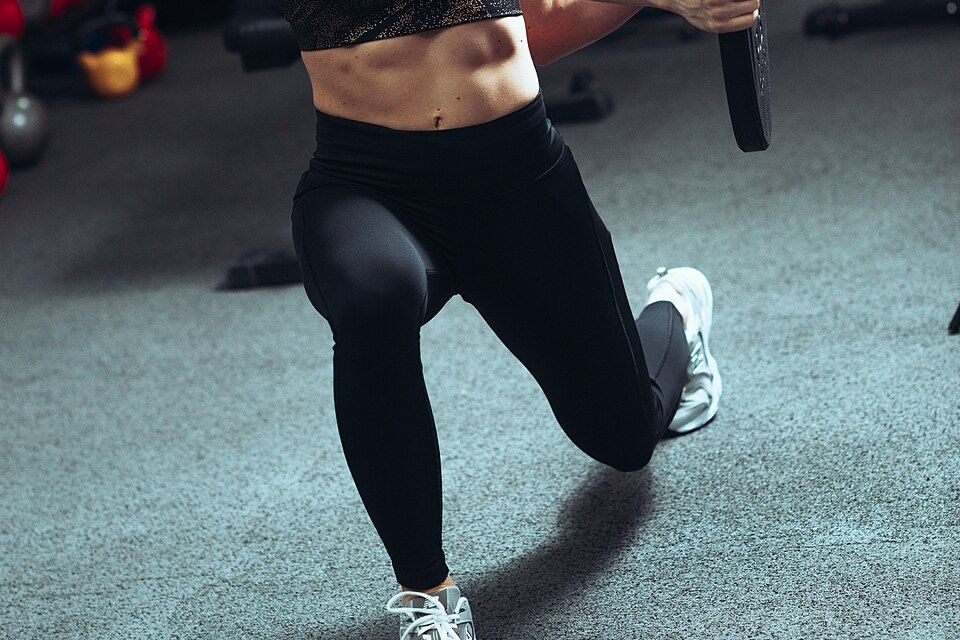
Shixart1985 · CC BY 2.0 (recadrée)
Should you adapt your weight training to your menstrual cycle? Not necessarily: in major reviews, the cycle phase changes strength and endurance hardly at all, at most slightly worse at the very start of the cycle. Trials concentrating sessions in the first half of the cycle are small and contradict each other, and the pill does not change gains on average. What matters most is how you feel that day. Here is what twenty-two studies measure.
Does your strength change throughout the cycle?
Very little. The largest meta-analysis on the subject pooled 78 studies in women with regular cycles. It finds performance slightly worse in the early follicular phase, the very start of the cycle, for both strength and endurance, but the effect is described as 'trivial': an effect size of −0.06, with a confidence interval from −0.16 to +0.04, thus crossing zero. The studies are highly variable and generally low quality, and the authors advise against drawing general rules from them.
A second meta-analysis, focused on strength, compares the start of the cycle, ovulation, and the mid-luteal phase for maximal strength, isokinetic strength, and explosive strength: differences are insignificant or trivial (effect size up to 0.35). Individual studies say the same. In moderately active women whose phases were verified by hormone assay, neither strength nor muscular endurance varied across the three phases, over two consecutive cycles. In 13 trained women, strength, velocity, and power in the half-squat were very similar across all phases.
Mood weighs more than hormones
Some studies still find worse days. In 12 active women, an 8 km cycling time trial took 18.3 minutes in the mid-luteal phase versus 17.8 minutes in the mid-follicular phase, with mean power of 115 W versus 125 W. On those days, participants arrived with a more negative mood and felt more fatigued; heart rate, breathing, and oxygen consumption, however, did not change.
Did you know?
DOMS, slightly stronger at start of cycle
A meta-analysis of 19 studies on muscle damage finds a difference between phases for DOMS and for strength lost after a hard session, but not for creatine kinase, the blood marker of damage. DOMS and strength loss were most marked in the early follicular phase, when sex hormones are at their lowest. The authors suggest considering slightly lighter loads or more recovery at that time. To manage DOMS themselves, see DOMS: what to do.
Scheduling sessions around your cycle: what trials show
The most common idea is to train more often during the first half of the cycle, the follicular phase. A 2022 review supports this: according to its authors, several studies suggest this schedule would yield greater strength and muscle gains. Trials supporting it exist. In a 1995 trial, training every other day in the follicular phase and once a week in the luteal phase increased maximal strength by 32.6%, versus 13.1% with a session every three days across the whole cycle. In trained women followed for four months, five leg sessions per week during the first two weeks of the cycle improved squat, jump, and hamstring strength, and gained leg lean mass, which the same volume placed late in the cycle did not.
But other trials find nothing, or the opposite. In 14 women who trained their arms for 12 weeks, concentrating sessions in the follicular or luteal phase gave similar gains: +6.2% muscle cross-section on one side, +7.8% on the other, with no major strength difference either. With light training under cuff (6 consecutive days), muscle grew more in the luteal phase (+5.7%) than follicular (+3.7%), and strength only progressed in the luteal phase.
« Cycle syncing » is not proven
And the pill?
A meta-analysis of 42 studies and 590 participants finds pill users would be on average slightly less performant than women without hormonal contraception, a likely trivial difference; 83% of studies were of moderate, low, or very low quality. Between pill days and the break, performance did not vary. For muscle-building gains, a meta-analysis of 8 studies and 325 participants finds no effect of the pill, neither on muscle, nor power, nor strength: its authors conclude there is no reason to recommend or advise against it for progress.
Individual trials go both ways. In a 10-week programme, women not on the pill gained 3.5% lean mass (1.6 kg), versus 2.1% (1.0 kg) on the pill, and the gap depended on progestin type. In another 10-week programme, it was rather the reverse: 3.7% on pill versus 2.7% off, a non-significant difference, for similar muscle and strength gains. A third study saw a trend toward more muscle on pill (+11% vs +8% muscle cross-section) for the same strength gained. And in already trained women, over 12 weeks as in combined strength and endurance training, no difference between groups.
Two 10-week trials published in 2022
The limits, though
In practice
You can train normally at all phases of your cycle: your strength does not collapse at any point, and nothing proves that a programme timed to the calendar makes you gain more. If some days you feel tired or less motivated, especially at the very start of the cycle, reducing the load or planning more recovery is an option suggested by the authors of the meta-analysis on soreness. On the pill, nothing justifies changing your training. To build your programme, the session generator handles it; to track your loads from week to week, the 1RM calculator. And if you wonder whether creatine works for women too, see creatine for women, seniors and teens.
In summary
| Your question | What the studies say |
|---|---|
| Does my strength vary by phase? | Hardly: a trivial effect, slightly worse at the very start of the cycle |
| Why are some days worse? | Rather mood and fatigue than hormones, according to a study |
| Should you train more in the follicular phase? | Two trials say yes, two others no or the opposite: not proven |
| Does soreness change? | Slightly stronger at cycle start, according to a meta-analysis of 19 studies |
| Does the pill hinder gains? | Not on average (8 studies, 325 women); trials in both directions |
| Does the pill change performance? | A probably trivial difference, nothing between pill days and the break |
What makes you progress is a programme followed consistently: prepare yours with the session generator.
Your cycle doesn't stop you progressing: build a programme you can follow all year.
Create my programmeEvery figure in this article comes from a study you can open: the underlined mentions lead to the summary of the work it is drawn from, written from the abstract alone. These studies involve healthy women with regular cycles; if your periods are irregular, absent or very painful, talk to a healthcare professional. The choice of contraception is discussed with a doctor, not for training reasons. Informational content, which does not replace a healthcare professional's advice.