Drop sets, supersets, rest-pause: more muscle, or just less time?
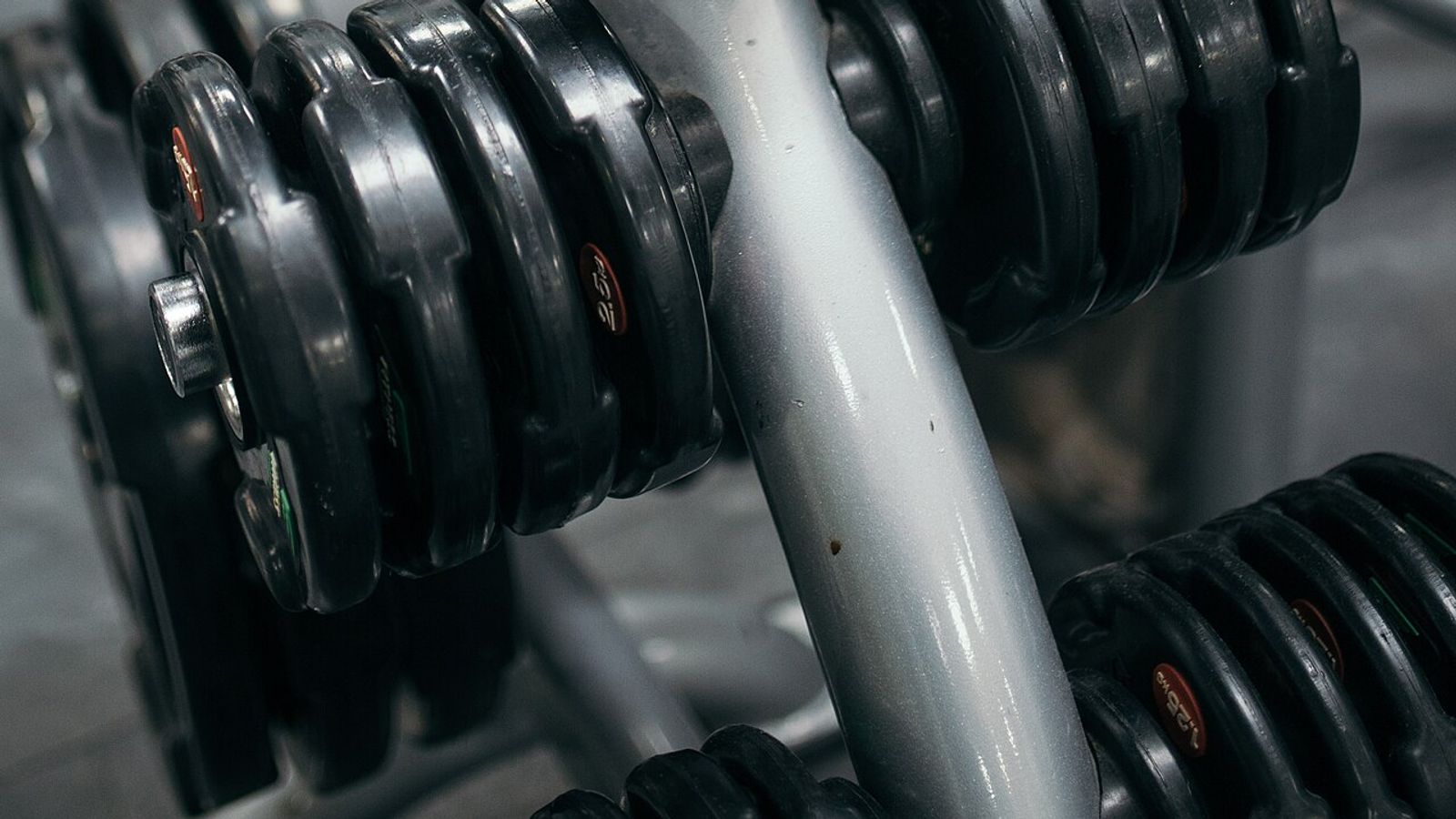
Shixart1985 · CC BY 2.0 (recadrée)
Drop sets, supersets, rest-pause: do they build more muscle than standard sets? No, not when you do the same amount of work. Meta-analyses find just as much muscle and just as much strength. Their real asset is time: a training session that can be twice as short. The price to pay is a harder effort to endure and sometimes a longer recovery. Here is what twenty-two studies measure.
What we are talking about
These techniques change the way reps are performed consecutively, not the exercise. The drop set: you go to muscular failure, lower the load and start again immediately, as described in a 2023 meta-analysis. The superset: two exercises in a row, with little or no rest between them, for example one muscle then its opposite, according to a 2025 meta-analysis.
Rest-pause is, like the drop set, a way to intensify the set, according to a 2026 trial. Cluster sets, on the other hand, break up the set with short pauses: in a 2025 trial, three blocks of 4 reps separated by 20 seconds instead of 12 reps all at once.
Finally, pre-exhaustion places an isolation exercise right before a compound exercise, as in a 2014 trial.
More muscle? Meta-analyses say no
A meta-analysis of ten trials in already trained individuals compares these advanced techniques to standard training: no difference for muscle thickness, lean mass, or muscle cross-sectional area (standardized mean difference of 0.00 when everything is pooled). Same verdict for drop sets alone: a 2026 meta-analysis on 12 studies and 274 participants finds nothing for muscle (0.04) or strength (−0.04). Cluster sets either: 29 studies find no difference in strength, power, speed, muscle, or endurance.
Standardized mean difference on hypertrophy (0 = no gap), three meta-analyses
The trials point in the same direction. In 32 well-trained men, one leg worked with standard sets, the other with drop sets or pyramid sets, at equal volume, for 12 weeks: thigh cross-sectional area grew by 7.6% in standard, 7.8% in drop sets, and 7.5% in pyramid. In 28 trained men, rest-pause, drop sets, and standard sets yielded the same thigh thickness in 8 weeks.
The trap: comparing training sessions that do not involve the same work
Some signals in favor of rest-pause and drop sets
Not everything is flat. In the same 2026 meta-analysis, rest-pause shows a small advantage for muscle, and all advanced techniques combined show a moderate advantage for strength (0.351). In 18 trained individuals, six weeks of rest-pause increased thigh thickness by 11% compared to 1% in standard sets, with equivalent strength. In the trial on 28 men, rest-pause improved the squat slightly more than standard sets.
Regarding drop sets, in 16 men, the leg doing drop sets thickened the rectus femoris (one of the thigh muscles) more in certain areas, with no difference for the vastus lateralis or for strength. And in 16 young men, a single drop set increased triceps size by 10% in six weeks, compared to 5.1% for three standard sets, and strength by 16.1% compared to 25.2%. These are small trials, which meta-analyses have not overall confirmed.
Did you know?
The real asset: time
The meta-analysis on supersets (19 studies, 313 participants) quantifies it: as many reps and as much total load as in standard sets, but a shorter training session and a markedly greater efficiency (1.74). A 2025 review estimates that supersets reduce training session duration by about 50%. For drop sets, certain ways of performing them took from half to a third of the time of a standard training session. A review on short programs holds the same idea: supersets, drop sets, and rest-pause cut training time roughly in half, at equal volume, and probably suit muscle better than strength.
If you are short on time, this is the right use. The training session generator builds a program according to the time you have available, and the article on rest time between sets explains how far to shorten standard pauses.
The price: harder, and sometimes a little less strength
Saving time comes at a price. With drop sets, the 2026 meta-analysis finds a much higher perceived exertion (1.62) and more lactate (0.67). Supersets also increase lactate and muscle damage, and may require more recovery between training sessions. In 14 men, 24 hours after a superset or tri-set training session, the jump had not yet returned to its baseline level, whereas it had after the standard training session.
And for maximum strength, heavy supersets come at a slight cost. In a 10-week randomized trial, using the leg press, bench press, lat pulldown, and seated row, the straight-set group gained 5.2 kg more on the lat pulldown than the superset group. Body composition, however, changed similarly in both groups: more muscle, less fat.
Pre-exhaustion, a false good idea
Rest-pause or drop sets: which one to choose?
A 2026 trial in 23 trained adults compared them directly for 8 weeks, with supervised nutrition: 1.4 kg more lean mass with drop sets, 1.2 kg with rest-pause, and 12.3 kg versus 9.5 kg on the bench press, with no significant difference. A 2026 network meta-analysis finds no advanced method better than another, nor better than traditional training, for strength and power. A 2019 review views them mainly as a way to vary training in well-trained athletes, to break through a plateau or monotony. So choose the one you enjoy doing.
In short
| Your question | What the studies say |
|---|---|
| Do drop sets build more muscle? | No, at equal volume: a difference of 0.04 across 12 studies |
| And supersets? | Just as much muscle, a training session about twice as short |
| Rest-pause? | A slight potential advantage for muscle and strength, based on few studies |
| Cluster sets? | Same results across 29 studies, perhaps with less fatigue during the training session |
| Pre-exhaustion? | Nothing more than traditional sets |
| The downside? | Higher perceived exertion, more lactate, sometimes longer recovery |
To track your weights from one training session to the next, regardless of the technique, the 1RM calculator estimates your maximum from a single set.
A program tailored to your level, your equipment, and the time you have available.
Generate my training sessionEvery figure in this article comes from a study you can open: the underlined mentions lead to the summary of the work it is drawn from, written from the abstract alone. The trials involve small groups, mostly young men: women and older adults are poorly represented. Informative content, which does not replace the advice of a healthcare professional or a coach.