Protein before sleep: does evening casein build more muscle?
By Kalorya · November 10, 2026 · 8 min read
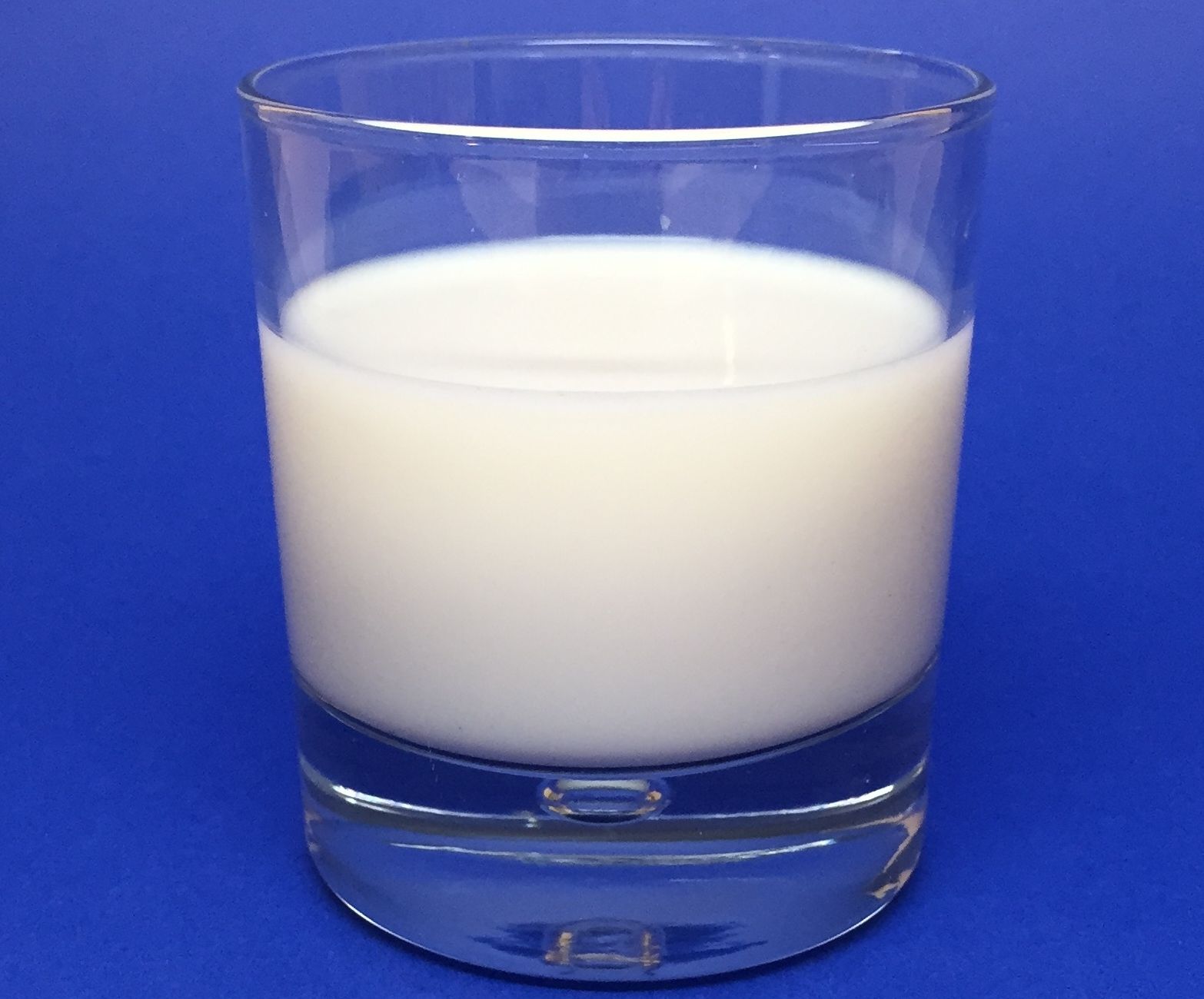
NIAID · CC BY 2.0 (recadrée)
Does a protein shake before bed build more muscle? During the night, yes: 40 g of casein at bedtime increases protein synthesis in your muscle. Over several weeks, the advantage mostly comes from the extra protein, not the timing: with equal intake, the evening does no better than the day, and for those already eating enough protein, nothing extra. Here is what twenty-two studies say.
What happens during the night
The idea comes from a series of trials conducted with labeled proteins, which can be tracked right into the muscle. In 16 young men who had completed a resistance training session in the evening, 40 g of casein drunk right before sleep were well digested and absorbed during sleep: whole-body protein balance went from −11 to +61 over the night, and muscle protein synthesis was about 22% higher, borderline significant. In 48 men aged 72 years on average, 40 g of casein increased muscle protein synthesis during the night (0.044% per hour versus 0.033% with placebo); 20 g, with or without leucine, did not perform significantly better than the placebo.
Not everything points the same way. In 36 young men, 30 g of casein after a session, with or without 2 g of leucine, were indeed found in the muscle fibers, but the rate of muscle protein synthesis was no higher than with placebo. Two things reinforce the effect. In 23 older men, evening physical activity made the response to the 40 g of bedtime protein 27 to 31% stronger. And in 36 young men after an endurance effort, 45 g of casein or whey increased mitochondrial and fiber protein synthesis just as much as one another. Finally, 60 g of protein at bedtime did not prevent the 20 g at breakfast from working the next morning.
Did you know?
Over weeks: more muscle?
The trial that started the trend, in 44 young men over 12 weeks of resistance training, is positive: 27.5 g of protein every evening before bed led to greater strength gains (+164 kg versus +130 kg in one-repetition maximum) and more thigh muscle than the placebo. But this placebo contained no calories: the protein group therefore ate more total protein, and the trial does not say whether the timing mattered.
Randomized trial, 44 young men in resistance training (2015); calorie-free placebo
A 2019 review, written by the team that conducted most of these trials, concludes there is a beneficial effect on mass and strength. A 2021 systematic review (9 studies) is more cautious: a possible gain in young men, nothing demonstrated in older men, and a warning, because the compared groups were not eating the same amount of protein.
In the evening, or anytime?
That is the real question, and the trials that ask it all answer the same way. In 13 men doing resistance training for 10 weeks, with the same diet providing 1.8 g of protein per kilo per day, 35 g of casein taken during the day or right before bed yielded the same muscle and strength gains; the authors conclude that total daily protein intake is what matters, more than the timing. In 26 trained men and women, 54 g of casein in the morning or evening for 8 weeks changed nothing, neither body composition nor performance. And in 24 professional cyclists during an intensive training camp, 40 g of casein at bedtime, 40 g in the afternoon, or a sugary drink at bedtime amounted to the same thing: they were already eating more than 2.5 g of protein per kilo.
It is the total that counts
After 60: the promise falls flat
It is in older individuals that the most hope was placed, since their muscle responds less well to protein. Long-term trials are disappointing. In 41 active men aged 70, 21 g of protein after each workout and every evening before bed, during 12 weeks of resistance training, gave neither more strength nor more muscle than an isocaloric placebo. In 30 untrained men aged 66, 40 g after exercise or at bedtime did no better than resistance training alone: everyone improved, and their baseline intakes were already at least 1 g per kilo. At night, aging muscle uses these proteins well; over three months, it does not show.
What about next-day recovery?
One trial is positive: in 10 professional football players after an evening match, 40 g of casein at bedtime limited the loss of jump height at 12 hours (−1.6% versus −6.6% with carbohydrates) and soreness (42 versus 72 on a 100 mm scale). The others find nothing. In 18 trained men, 40 g of casein after an evening session changed neither next-day strength nor muscle damage markers. In 32 runners, whey every evening during a week of intensified training did not prevent the drop in 5 km performance, which was the same as with carbohydrates. And in 122 British army recruits during 12 weeks of training, 20 g or 60 g of protein in the evening improved neither performance, body composition, nor recovery.
Not a shortcut
Does it make you fat, or lean?
Neither, from what we know. A systematic review of 11 studies finds limited or no effects on energy expenditure and appetite with 24 to 48 g of casein 30 minutes before bedtime. In 12 obese men, evening casein changed neither fat utilization, resting expenditure, nor morning appetite. In 12 individuals aged 71, 40 g of casein did not change what they ate at breakfast. And the 54 g of casein per day from the 8-week trial did not cause any fat mass gain.
In practice
Start with your daily total: that's what dictates it, as the article on the anabolic window already shows. If it is too low and the evening is the easiest time to add protein, the doses tested range from 20 to 40 g, about 30 minutes before bedtime; in elderly men, 40 g worked, 20 g didn't. Casein or whey, at night, it's the same. An evening training session enhances the effect. And if you sleep poorly, sleep matters more for your muscle than the shake: the details are in sleep and muscle. To find out how much protein you are really eating, log a typical day in the food diary.
Summary
| Your question | What the studies say |
|---|---|
| Are bedtime proteins used? | Yes: digested during the night, they increase muscle protein synthesis (40 g) |
| More muscle over weeks? | One trial on young people, against a placebo without protein; nothing in seniors |
| Evening better than daytime? | No, at equal protein amounts (three trials) |
| Casein or whey? | Same for muscle at night; whey helped nine people sleep better |
| Better recovery the next day? | One trial on 10 soccer players yes, three others no |
| Does it make you fat? | No extra fat, no effect on appetite |
To find out if your total protein intake is already sufficient, try the food diary.
The daily total matters more than the timing: check yours before buying a tub of casein.
Count my proteinEvery figure in this article comes from a study you can open: the underlined mentions lead to the summary of the work it is drawn from, written from the abstract alone. Informative content, which does not replace the advice of a healthcare professional.