Pre-workout: does it do better than caffeine alone?
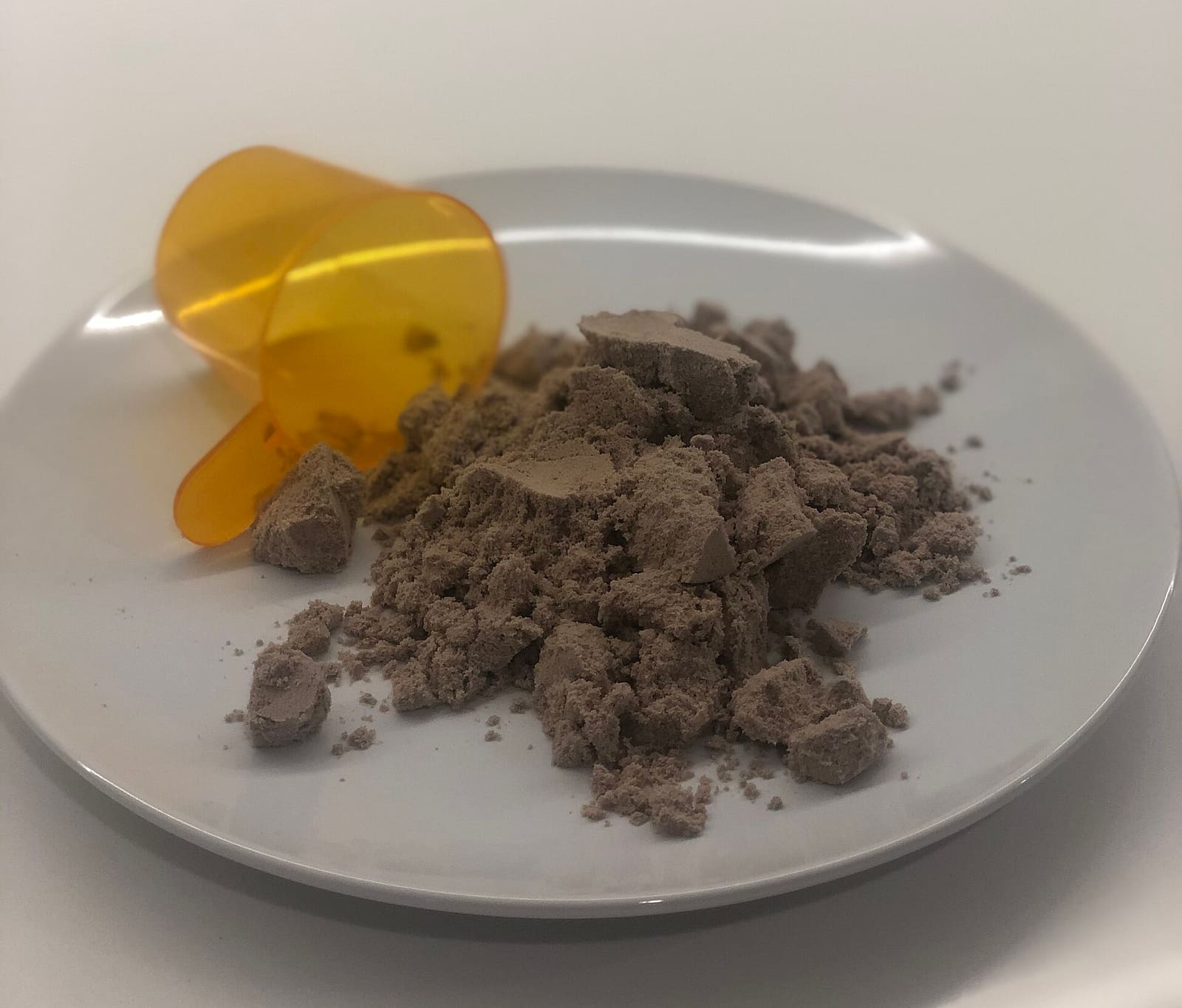
Em87128712 · CC BY-SA 4.0 (recadrée)
Energy, focus, "pump", strength: the pre-workout, that powder mixture swallowed before the session, promises a lot. Trials sometimes find a small gain in the number of repetitions or power, and sometimes nothing at all. Above all, when compared to caffeine alone, no trial sees it do better. And often, you do not really know what is inside the box.
What is inside the box
The analysis of the 100 best-selling pre-workouts averages 18.4 ingredients per product, including 8.1 in "proprietary blends": the label gives the total weight of the blend, not the dose of each ingredient. In total, 44.3% of the ingredients fall into this case. The three most frequent are beta-alanine (87% of products, 2.0 g on average), caffeine (86%, 254 mg) and citrulline (71%, 4.0 g). According to the authors, beta-alanine is on average below the effective dose, and caffeine close to the bottom of the effective range.
Caffeine itself is not always what you think. Out of 15 popular pre-workouts in Australia, a serving contained from 91 to 387 mg of caffeine; only 6 labels out of 15 indicated it, and the measured amounts ranged from 59% to 176% of what was written, with variations from one batch to another. Out of 12 products labeled "Citrus aurantium" (bitter orange, the source of synephrine), only 5 had a chemical profile consistent with the plant; some contained no trace of it.
On the session: a small effect, not always
Several crossover trials against placebo find a gain. In 12 men, the pre-workout made the last bench press set, until muscular failure, go from 9.1 to 9.8 repetitions, and the total volume from 710 to 753 kg; the authors note that such small effects have limited practical interest. In 12 other men, the total session volume increased by 9%, that of the lower body by 14%, but not that of the upper body. In 12 trained men, lower body muscular endurance went from 11 to 13 repetitions, with more energy and focus felt.
Maximum strength, on the other hand, moves little. In 13 trained men, sprint power on a bicycle increased (782 W against 722 W at peak), but neither maximum strength in the bench press nor vertical jump or medicine ball throw changed. The 2018 review summarizes it thus: taking it before the session could improve muscular endurance and mood, but results on strength and power are mixed.
In running, the two trials contradict each other. In 20 trained runners, a pre-workout with 150 mg of caffeine, 1.6 g of beta-alanine and 1 g of arginine changed nothing in the 5 km time (23.62 against 23.51 minutes). In 11 university cross-country runners, another extended the time to exhaustion by 154 seconds on average.
Compared to caffeine alone: never better
This is the question that matters: if caffeine does most of the work, what are you paying extra for? Three trials gave trained practitioners either the pre-workout or caffeine alone, at an equal dose in two of them. In 15 men, the number of repetitions on the bench press was higher with caffeine alone; the authors conclude that the tested pre-workout is less effective and less profitable than caffeine. In 12 men, neither the pre-workout nor caffeine improved arm work, nor blood flow measured by ultrasound, the famous "pump". In 10 women, no difference in repetitions until muscular failure between placebo, caffeine and pre-workout, at half-dose as well as at full dose.
Randomized double-blind trial (2024); no significant difference
In 24 trained men and women, a pre-workout with caffeine and the same without caffeine both increased maximum strength in isometric squat; the caffeinated version gave more felt energy, but neither improved leg press or bench press. Same observation with creatine: in 18 men, a pre-workout based on 3 g of creatine did better than placebo on a fatigue test, but no better than 3 g of creatine alone.
Over several weeks
In 19 active women, 7 weeks of weight training with a pre-workout or a placebo gave the same results: no additional effect on fat mass, fat-free mass or maximum strength, which progressed in both groups. In active men who took it for 28 days, the drop in fat mass and the rise in fat-free mass are measured across all participants, placebo included; only leg press strength progressed solely in the supplemented group. The 2018 review judges that regular intake, with a well-built training, seems to increase lean mass, but that the long-term effect on strength, endurance and aerobic performance remains unclear.
Side effects
In a survey of 872 regular users, 72.2% had been taking it for over a year, most often 4 to 5 times a week. More than half (54%) reported side effects: skin reactions, heart abnormalities, nausea, more often in women. A 2013 review notes digestive disorders, heart rhythm disorders and increases in blood pressure, and notes that data on combined products are rare or contradictory.
Serious accidents have been published. A healthy 25-year-old man suffered a hemorrhagic stroke on both sides of the brain shortly after taking a pre-workout containing caffeine and beta-phenylethylamine. A healthy 33-year-old woman suffered cardiac distress, with chest pain and rising troponin, after a pre-workout and intense effort. An isolated case does not prove that the product is the cause, but the authors point out the hidden ingredients in proprietary blends.
In controlled trials, the picture is calmer: 28 days with no effect on kidney and liver markers, heart rate or blood pressure, 7 weeks with no effect on pressure, heart or blood lipids. But these safety studies last less than 8 weeks, and the review recalls that a pre-workout can contain substances banned in competition, voluntarily or by contamination. The 2025 review on 24 studies finds effects on the heart and vessels sometimes favorable, sometimes unfavorable, depending on doses and individuals.
What to remember
| Question | What the studies say |
|---|---|
| Does a pre-workout improve the training session? | Sometimes a little: +0.7 repetitions, +9% volume or more sprint power depending on the trials; nothing in others |
| Does it do better than caffeine alone? | Never in the three trials comparing them; worse in one of them |
| And the "pump"? | Blood flow unchanged in the only trial that measured it |
| Over several weeks? | No additional effect on muscle or strength in 19 women over 7 weeks |
| Do you know what you are taking? | Not always: 44.3% of ingredients in hidden doses, caffeine from 59% to 176% of the label |
| Is it safe? | 54% of regular users report adverse effects; some severe adverse events published; no data beyond 8 weeks |
In the three trials comparing it to caffeine alone, the rest of the blend adds nothing measurable.
Strength, execution speed, dose, habit: what twenty studies say about caffeine alone.
Read: caffeine before weight trainingEvery figure in this article comes from a study you can open: the underlined mentions lead to the summary of the work it is drawn from, written from the abstract alone. The trials involve 10 to 24 people, almost always young active or trained adults, and each tests a different product: their results do not transpose from one brand to another. Informative content, which does not replace the advice of a healthcare professional.