Ashwagandha: stress, sleep and muscle, what studies say
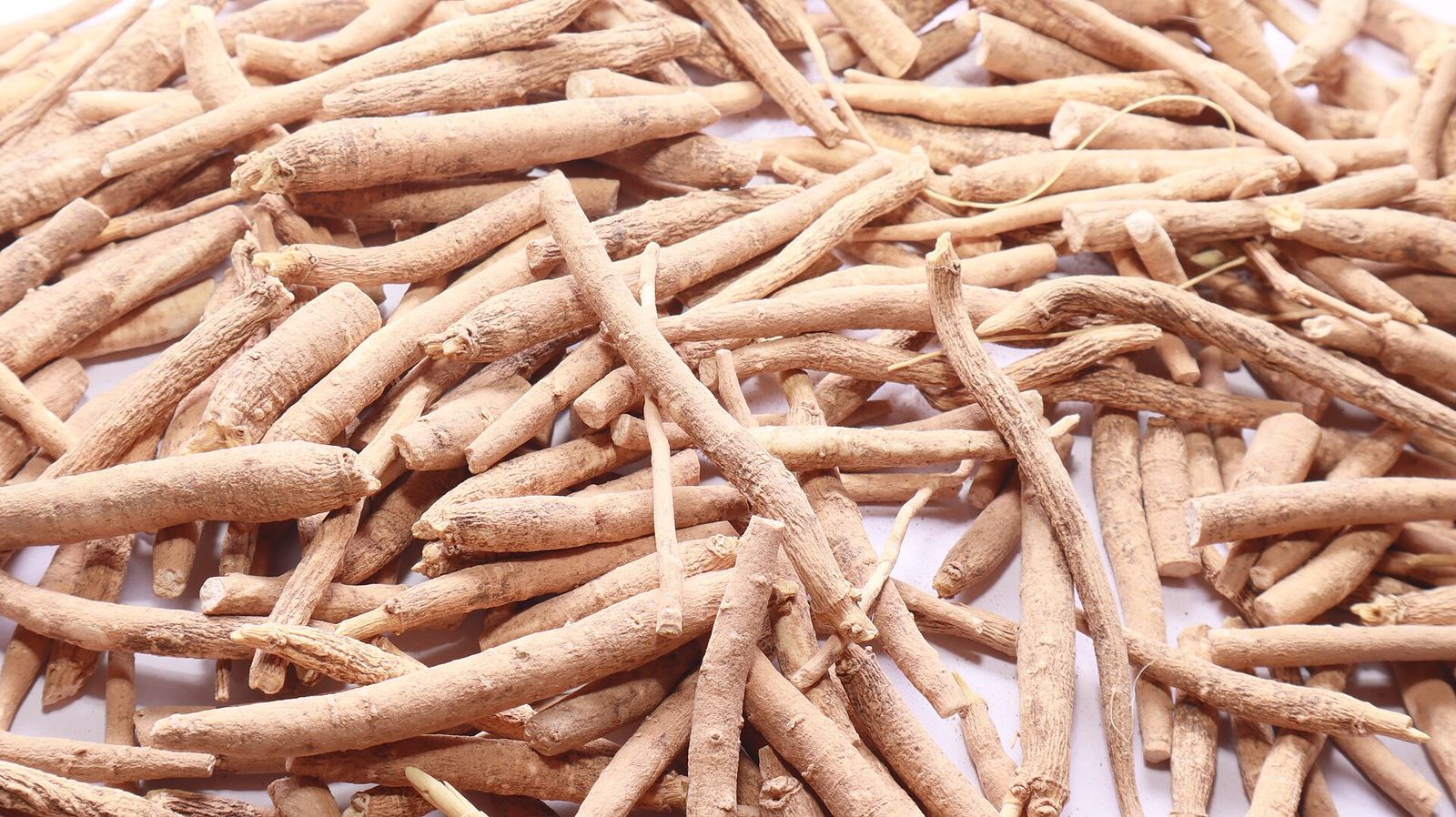
Piyush Kothari · CC BY-SA 4.0
Ashwagandha is sold for everything at once: stress, sleep, strength, testosterone. Studies actually support it for stress and a bit for sleep. On muscle, results are positive but based on a few small trials, which the most recent meta-analysis judges to be fragile. And a rare but serious risk to the liver exists, which you must know about before taking it.
Stress: the best-supported use
A 2022 meta-analysis pools 12 randomized trials and 1,002 participants: ashwagandha reduces anxiety (standardized mean difference −1.55) and stress (−1.75) compared to placebo. On stress, the effect is concentrated between 300 and 600 mg per day. However, its authors judge the certainty of the evidence to be low. Another meta-analysis, in 2024, on nine trials and 558 people, finds a drop of 4.7 points on the perceived stress scale, 2.2 points on the Hamilton anxiety scale, and lower blood cortisol; four trials report mild to moderate adverse effects. A 2026 meta-analysis on 22 studies additionally finds a link between the dose and the reduction in stress.
Isolated trials point in the same direction. In 58 stressed adults, eight weeks at 250 or 600 mg per day reduced perceived stress and cortisol, and improved sleep compared to placebo. In 98 adults under chronic stress, another extract (roots and leaves) reduced stress at 125, 250, and 500 mg per day, all the more so as the dose was high. A systematic review of nine studies confirms the drop in cortisol in stressed individuals, specifying that long-term effects remain poorly understood.
Sleep: a small effect, especially in case of insomnia
A meta-analysis of five trials (400 participants) finds a small but real effect on sleep (standardized mean difference 0.59 in favor of ashwagandha). It is clearer in people diagnosed with insomnia, at 600 mg per day or more and over eight weeks or more. A 2024 meta-analysis, on five trials and 254 people, sees sleep onset latency, duration, and efficiency improve. In 58 people with insomnia, 300 mg twice a day for ten weeks shortened sleep onset and improved sleep quality.
If you already sleep properly, nothing in these studies says you will sleep better: the effect is seen primarily where there is a problem to fix.
Muscle: positive trials, but few in number
A 2015 trial in 57 young men doing resistance training, at 600 mg per day for eight weeks, finds more strength than with placebo on the bench press (+46.0 kg vs. +26.4 kg) and leg extension (+14.5 kg vs. +9.8 kg), more volume in the arms and chest, and less muscle damage. The STAR trial, twelve weeks in 38 active men with another extract (500 mg per day), also finds greater gains on the squat (+19.1 kg vs. +10.0 kg) and bench press (+12.8 kg vs. +8.0 kg), and better perceived recovery.
But the 2026 meta-analysis on ashwagandha combined with resistance training found only four trials, including three usable ones, for 161 people. It estimates a gain on the bench press (0.60) and lower body (0.52), then concludes that this evidence is weak to very weak, statistically fragile, with no established effect on fat mass, and that larger and independently funded trials are needed.
Resistance training: 3 pooled trials, 161 people (2026); performance and endurance: 13 trials, 599 people (2026)
The other 2026 meta-analysis, on 13 trials and 599 people, finds an overall improvement in physical performance (0.47), but its prediction interval crosses zero: a new trial could very well find nothing. It is on aerobic endurance that the results are most consistent (0.54); on strength, the authors judge them uncertain. The best-supported dose is 500 to 600 mg per day. A 2020 meta-analysis estimates the VO2max gain at 3 points (interval from 0.18 to 5.82), across four studies and 142 people, with very dispersed results. A 2021 Bayesian meta-analysis also concludes an advantage over placebo in men and women, while calling for more comparable studies in athletes.
In athletes, leaner results
And testosterone?
In the 2015 trial, the young men's testosterone rose by 96.2 ng/dL vs. 18.0 under placebo. In 57 overweight aging men, followed for sixteen weeks in a crossover design, the increase was 14.7% greater than with placebo, and that of DHEA-S was 18% greater — but without any difference in fatigue or vigor. A hormone that rises within normal values does not say much about what you will feel: that is the subject of our article on testosterone boosters.
The liver: rare, but important to know
A series of five cases from Iceland and the US Drug-Induced Liver Injury Network describes hepatitis after 2 to 12 weeks of ashwagandha: jaundice, nausea, fatigue, itching, which lasted 5 to 20 weeks; tests returned to normal in 1 to 5 months in four patients. A case series in India is more serious: out of 23 patients with ashwagandha-related liver injury, five already had chronic liver disease, and three of them died from acute liver failure. In the others, the injury lasted but healed on its own.
These are case series: they show that the risk exists, not how frequently it occurs. A safety trial in 80 healthy adults, 300 mg twice a day for eight weeks, found no liver, thyroid, or blood abnormalities, and no adverse effects. But eight weeks in 80 people cannot spot a rare accident. If you have a liver disease, these cases are a clear reason to abstain; and jaundice during a cure requires stopping and consulting a doctor.
The thyroid reacts too. In 50 people with subclinical hypothyroidism, 600 mg per day for eight weeks moved TSH, T3 and T4 compared to placebo. This is an effect to be aware of if your thyroid is monitored or treated: talking to your doctor before starting is not just a formality.
| What you are looking for | What studies say |
|---|---|
| Less stress | Yes, in several meta-analyses, at 300–600 mg/day; evidence judged weak by their authors |
| Better sleep | A small effect, especially in case of insomnia, at 600 mg/day and more, over 8 weeks and more |
| More strength in weight training | Positive in 3–4 small trials; weak to very weak evidence according to the 2026 meta-analysis |
| More endurance | The most consistent physical result (0.54) |
| More testosterone | It goes up in two trials, with no measured effect on fatigue or vigor |
| Safety | Well tolerated over 8 weeks; rare but serious liver damage, especially if the liver is already diseased |
Dosage, precautions and all the studies on the page, one by one.
See the ashwagandha supplement pageEvery figure in this article comes from a study you can open: the underlined mentions lead to the summary of the work it is taken from, written from the abstract alone. Muscle trials involve 30 to 57 people, several meta-analyses themselves judge their evidence weak, and the extracts tested are not all the same. Informative content, which does not replace the advice of a healthcare professional.